Table of Contents
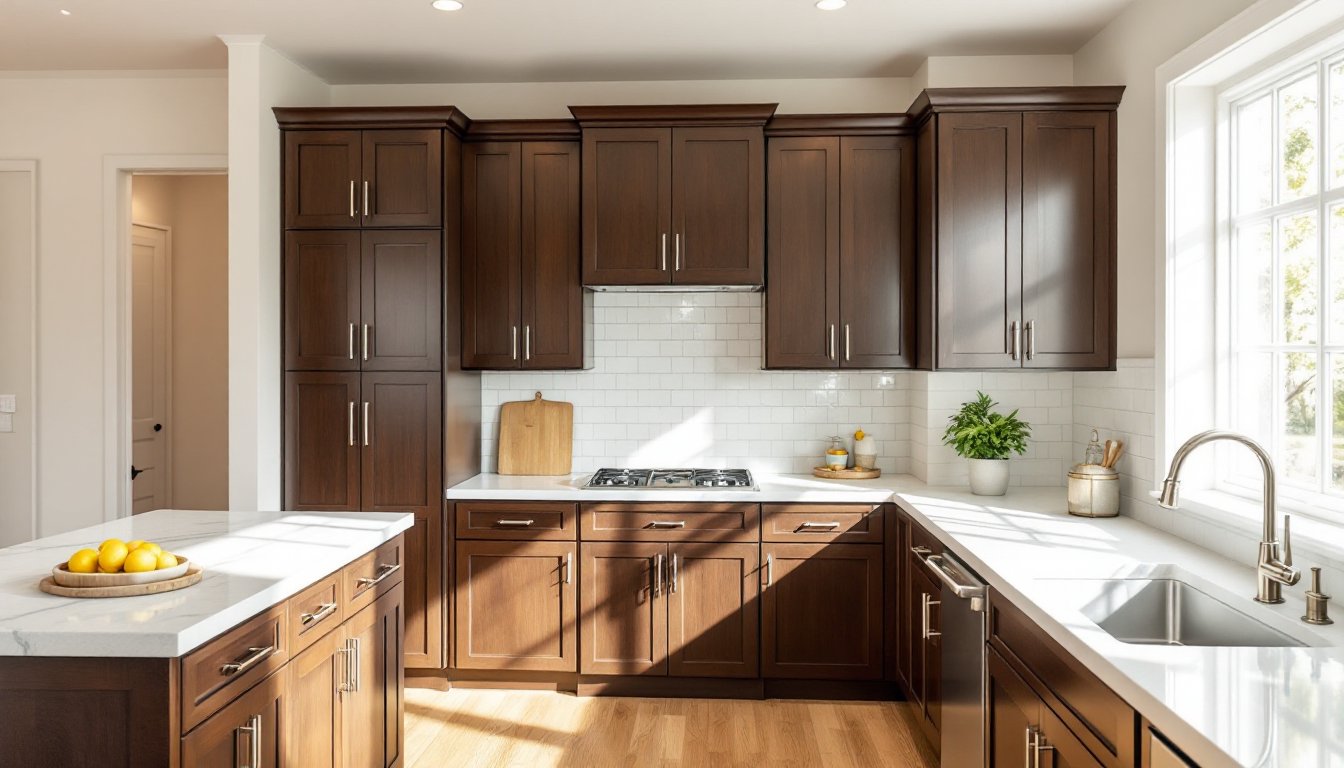
ToggleDark brown cabinets aren’t going anywhere, they’re practical, hide wear, and anchor a kitchen with warmth. But pairing them with the right colors separates a cramped, dated space from one that feels balanced and intentional. Whether you’re repainting walls, replacing a backsplash, or just swapping out hardware, the colors you choose will either fight your cabinets or make them look like a deliberate design choice. This guide walks through tested color schemes that work with dark brown cabinetry, from bright and airy neutrals to bold contrasts, plus the countertop and backsplash materials that tie it all together.
Key Takeaways
- Dark brown cabinets are timeless and durable, hiding wear effectively, but require intentional color schemes for walls, countertops, and backsplash to avoid a cramped, dated appearance.
- Warm whites and creams like Benjamin Moore’s Swiss Coffee create contrast and reflect light, keeping kitchens feeling open while complementing dark brown wood without clashing.
- Earthy tones such as sage, terracotta, and warm grays (greige) pair naturally with dark brown cabinets for a cohesive, layered look that bridges traditional and modern styles.
- Bold dark schemes using navy, charcoal, or black create sophistication and depth in kitchens with strong natural light, but require adequate LED lighting (300+ lumens per foot) to prevent a cave-like feel.
- Quartz countertops and white subway tile backsplash serve as versatile visual bridges between cabinets and walls, with grout color choice significantly impacting overall design cohesion.
- Accent colors like soft blue-gray, mint, or teal inject freshness into dark brown kitchens while maintaining balance, and can be layered into textiles and hardware without overcommitting to a single color.
Why Dark Brown Cabinets Are a Timeless Kitchen Choice
Dark brown cabinets, whether stained oak, walnut, or maple, offer durability that lighter finishes can’t match. They hide dings, grease splatters, and the inevitable wear from daily use. Structurally, they’re often solid wood or plywood with hardwood veneer, which means they last decades if the finish is maintained.
From a design perspective, brown grounds a space. It’s neutral enough to work with multiple styles, traditional, transitional, even modern farmhouse, without looking out of place. The challenge isn’t the cabinets themselves: it’s the surrounding palette. Dark wood absorbs light, so poor color choices can make a kitchen feel closed-in. The right scheme opens it back up.
If you’re working with existing dark brown cabinets and considering a refresh, focus on the largest surfaces first: walls, countertops, and backsplash. These drive the room’s overall tone and determine whether your cabinets read as intentional or leftover.
Bright and Airy: Pairing White and Cream Tones with Dark Brown
White and cream are the most reliable counters to dark cabinetry. They reflect light, create contrast, and keep the space from feeling heavy. This isn’t about bland builder-grade white, it’s about choosing the right undertone.
For walls, consider warm whites like Benjamin Moore’s Swiss Coffee or Sherwin-Williams’ Alabaster. These have slight yellow or beige undertones that complement the warmth in brown wood without going flat. Cool whites (those with blue or gray undertones) can clash with brown’s inherent warmth, making the space feel disjointed.
Cream tones work well if you want softness without stark contrast. They’re forgiving in kitchens with limited natural light. Paint one gallon covers roughly 350–400 square feet, so a standard 10×12-foot kitchen with 8-foot ceilings typically needs about one gallon for walls, accounting for two coats.
Pair white or cream walls with white subway tile or a cream-colored backsplash. Quartz countertops in shades like Caesarstone’s Pure White or a warmer option like Silestone’s Lagos Blue (a soft cream with gray veining) tie the palette together. If you’re going with laminate for budget reasons, Formica’s Calacatta Marble or Folkstone Celesta offer similar looks at $15–$30 per square foot installed, compared to $50–$100+ for quartz.
Keep hardware simple: brushed nickel or oil-rubbed bronze cabinet pulls maintain the clean, airy feel without competing for attention.
Warm and Inviting: Earthy Color Palettes That Complement Brown Cabinets
If you want a kitchen that feels grounded rather than bright, lean into earthy tones, terracotta, burnt orange, sage, warm grays, and muted golds. These colors sit adjacent to brown on the color wheel and create a cohesive, layered look.
Terracotta or rust work as accent walls or in backsplash tile. Consider a terra cotta subway tile or hexagonal mosaic in a burnt orange shade. These tones are especially effective when paired with natural materials like soapstone countertops or butcher block. Soapstone runs $70–$120 per square foot installed and darkens over time, which complements aged brown cabinetry.
Warm grays, specifically those with beige undertones (sometimes called “greige”), provide a modern neutral that doesn’t flatten the warmth of dark wood. Sherwin-Williams’ Accessible Beige or Benjamin Moore’s Revere Pewter are go-tos. They read as contemporary without the starkness of cool gray.
Sage green or muted olive tones bridge the gap between traditional and modern. Use them on walls or in a backsplash. Ceramic or porcelain tile in these shades is widely available and runs $3–$12 per square foot for materials. Pair with brass or aged brass hardware to emphasize the warmth.
For flooring, consider wide-plank oak or hickory in a natural or honey finish. The variation in wood tones creates visual interest without clashing. Engineered hardwood is a solid choice here, it’s more stable than solid wood in kitchens and costs $6–$12 per square foot installed.
Bold Contrasts: Using Navy, Black, and Charcoal for Drama
Not every kitchen needs to feel light and open. If you’ve got strong natural light or a large footprint, dark-on-dark schemes create depth and sophistication. The key is intentional contrast in texture and finish, not just color.
Navy blue pairs surprisingly well with dark brown. It’s rich without being heavy and works in both traditional and modern contexts. Paint walls in a shade like Sherwin-Williams’ Naval or Benjamin Moore’s Hale Navy. These designer-recommended color combinations offer strong contrast while maintaining warmth. Balance with white or cream countertops to break up the darkness.
Charcoal gray works when you want a moody, industrial feel. Use it on walls or an accent wall, and pair it with stainless steel appliances and matte black hardware. Quartz countertops with white or gray veining (like Cambria’s Brittanicca or Ella) keep the space from going flat.
Black is the riskiest but most dramatic option. A black subway tile backsplash or black soapstone countertops create high contrast with dark brown cabinets. Ensure you have adequate lighting, under-cabinet LED strips (at least 300 lumens per foot) and pendant lights are non-negotiable here. Without proper lighting, black and brown together will read as a cave.
Hardware matters more in dark schemes. Matte black or brushed brass pulls create breaks in the color field and help the eye differentiate between surfaces. If going this route, plan for 4–6 can lights or recessed LEDs rated at 700–1000 lumens each to maintain adequate task lighting.
Fresh and Modern: Green and Blue Accents to Brighten Your Kitchen
Green and blue tones inject life into kitchens with dark brown cabinets, especially when used as accents rather than dominant colors. These cool tones balance brown’s warmth without clashing.
Soft blue-gray walls, like Benjamin Moore’s Stonington Gray or Sherwin-Williams’ Sea Salt, are popular in transitional kitchens. They’re cool enough to feel fresh but have enough gray to avoid reading as pastel. Pair with white or light gray quartz countertops and a white subway tile backsplash for a classic look.
Mint or seafoam green work as backsplash colors or in small doses like bar stools or pendant light shades. A glass tile backsplash in a soft green reflects light and adds a glossy finish that contrasts with matte or satin-finished cabinets. Glass tile runs $7–$30 per square foot depending on size and finish.
Teal or deep turquoise can serve as an accent wall or in a patterned backsplash. Moroccan-style encaustic cement tile in teal and white is a bold but balanced option. It’s more maintenance than ceramic (cement tile requires sealing), but it’s a statement piece. Expect $10–$20 per square foot for materials.
For a cohesive look, pull the accent color into textiles, dish towels, a runner, or window treatments. This ties the room together without overcommitting to a color you might tire of. Hardware in brushed nickel or polished chrome keeps the palette cool and modern.
If you’re looking for more ideas on achieving a polished, cohesive kitchen aesthetic with smart color choices, consider how layering textures and finishes can enhance even a simple palette.
Choosing the Right Countertops and Backsplash for Dark Brown Cabinets
Countertops and backsplashes are the visual bridges between cabinets and walls. Get them wrong, and the whole scheme falls apart. Here’s what works.
Countertops
Quartz is the most versatile option. It’s non-porous, low-maintenance, and available in endless colors. For dark brown cabinets, consider:
- White or cream quartz (e.g., Caesarstone’s Statuario Nuvo) for maximum contrast.
- Warm gray with veining (e.g., Silestone’s Cemento Spa) for a softer, modern look.
- Butcher block for warmth and texture. It requires more upkeep (monthly oiling, immediate spill cleanup) but adds character. Expect $40–$65 per square foot installed.
Granite remains popular for its durability and natural variation. Lighter granites like Colonial White, Kashmir White, or Bianco Antico pair well with dark cabinets. Granite costs $40–$100 per square foot installed, depending on the slab rarity.
Avoid dark brown or black countertops unless you’re committed to a monochromatic scheme with excellent lighting. They blend into the cabinets and eliminate contrast.
Backsplash
The backsplash is where you can introduce pattern, texture, or a pop of color without overwhelming the space. Options:
- White subway tile: Classic, affordable ($1–$3 per square foot for materials), and timeless. Use a contrasting grout (light gray or charcoal) to add definition.
- Marble or marble-look tile: Adds elegance. Real marble requires sealing and is prone to staining: porcelain alternatives like those from homify’s design galleries mimic the look at lower cost and maintenance.
- Glass tile: Reflects light and works well in smaller kitchens. Available in nearly any color.
- Patterned cement or ceramic tile: Use sparingly (behind the range or sink) to avoid visual clutter.
Grout color matters. White grout shows stains but keeps things bright. Gray grout is more forgiving and works with most tile colors. Always seal grout in kitchens, unsealed grout absorbs grease and moisture and becomes a maintenance nightmare.
Safety note: When cutting tile, always wear safety goggles and a dust mask. Wet saws reduce dust but create slurry, set up outdoors or in a garage if possible. If drilling into tile for outlets or fixtures, use a carbide or diamond drill bit and go slow to avoid cracking.
Conclusion
Dark brown cabinets don’t limit your options, they anchor them. Whether you go bright with whites and creams, warm with earthy tones, bold with navy or charcoal, or fresh with greens and blues, the key is intentional contrast and balance. Start with your largest surfaces, walls, countertops, backsplash, and layer in hardware, lighting, and accents from there. Most of this work is DIY-friendly, though countertop fabrication and installation typically require pros. If you’re repainting or tiling, prep work (cleaning, sanding, priming) will make or break the result.