Table of Contents
ToggleBuilding a chicken run isn’t just about fencing off a patch of dirt, it’s about creating a secure, functional space that protects birds from predators while giving them room to forage and exercise. Whether someone’s starting with three hens or planning for a dozen, the run design impacts flock health, egg production, and how much time they’ll spend on maintenance. A well-built run prevents losses to raccoons, hawks, and neighborhood dogs, while poorly planned enclosures become muddy, disease-prone trouble spots. This guide covers portable coops, permanent structures, budget builds, and covered options that actually work in real backyards.
Key Takeaways
- A well-designed chicken run requires ½-inch hardware cloth on all sides with 12-18 inches of buried wire or an apron to prevent predator infiltration from raccoons, hawks, and other threats.
- Backyard chicken run designs should provide a minimum of 8-10 square feet per bird for the run (15+ square feet for heavy breeds) to prevent behavioral problems, disease, and poor egg production.
- Portable chicken tractors and PVC hoop runs offer flexibility for small flocks and rotational grazing but must be paired with secure nighttime coop lockup since they can’t withstand determined predators like coyotes.
- Permanent attached runs built with 4×4 pressure-treated posts, galvanized fasteners, and double-secured hardware cloth provide maximum security and simplify daily chores compared to mobile alternatives.
- Budget-friendly chicken run ideas using reclaimed materials like livestock panels, pallets, and PVC conduit can cost $150-250 versus $400-600 for new lumber, though predator protection should never be compromised for cost savings.
- Covered run options—from polycarbonate panels to tarps to mixed roofing systems—protect birds from weather while enrichment features like dust baths, perches, and edible landscaping improve flock health and reduce behavioral problems.
Why Every Backyard Flock Needs a Well-Designed Chicken Run
A coop provides roosting space, but chickens spend most daylight hours scratching, dust-bathing, and exploring. That’s where the run comes in. Without adequate outdoor space, birds develop behavioral problems, pecking, feather pulling, and aggression, that tank egg production and flock morale.
Predator pressure varies by region, but nearly every backyard faces threats. Raccoons reach through wire, hawks dive from above, and even domestic dogs can decimate a flock in minutes. A proper run uses ½-inch hardware cloth (not chicken wire, which raccoons tear through) on all sides, including buried apron or buried wire extending 12-18 inches outward to stop diggers.
Minimum space recommendations sit at 8-10 square feet per bird for the run, assuming they have coop access. Less space means faster ground degradation, higher parasite loads, and more frequent bedding changes. For heavy breeds or if birds spend all day in the run, bump that to 15 square feet per bird.
Local zoning and HOA rules often dictate setbacks, maximum flock size, and rooster restrictions. Some municipalities require permits for structures over a certain square footage. Check regulations before framing anything permanent, tearing down a non-compliant run is expensive and frustrating.
Portable and Mobile Chicken Run Designs
Chicken tractors are lightweight, ground-level enclosures without floors, designed to move daily or weekly. They let birds fertilize and aerate soil naturally while giving them fresh forage. Most measure 4×8 or 4×10 feet and house 3-5 hens. Frame them with 2×3 lumber to keep weight manageable, a pair of people should be able to lift and shift it.
Construction uses hardware cloth stapled and reinforced with wood battens over the edges. Add wheels or skids to one end for easier dragging across the yard. A hinged roof panel provides access for water, feed, and egg collection. Don’t skimp on corner bracing: these take wind and chicken weight.
PVC hoop runs work for temporary setups or rotating pasture grazing. Bend ¾-inch Schedule 40 PVC into arches, anchor with rebar stakes, and drape poultry netting or hardware cloth over the frame. They’re not predator-proof enough for overnight use without a locked coop, but they excel for daytime ranging, especially when paired with portable outdoor setups.
Mobile runs suit small flocks and gardeners practicing rotational grazing. They fall short for large flocks or areas with heavy predator pressure, a determined coyote can flip a lightweight tractor. Always lock birds in a secure coop at night.
Permanent Attached Run Ideas for Maximum Security
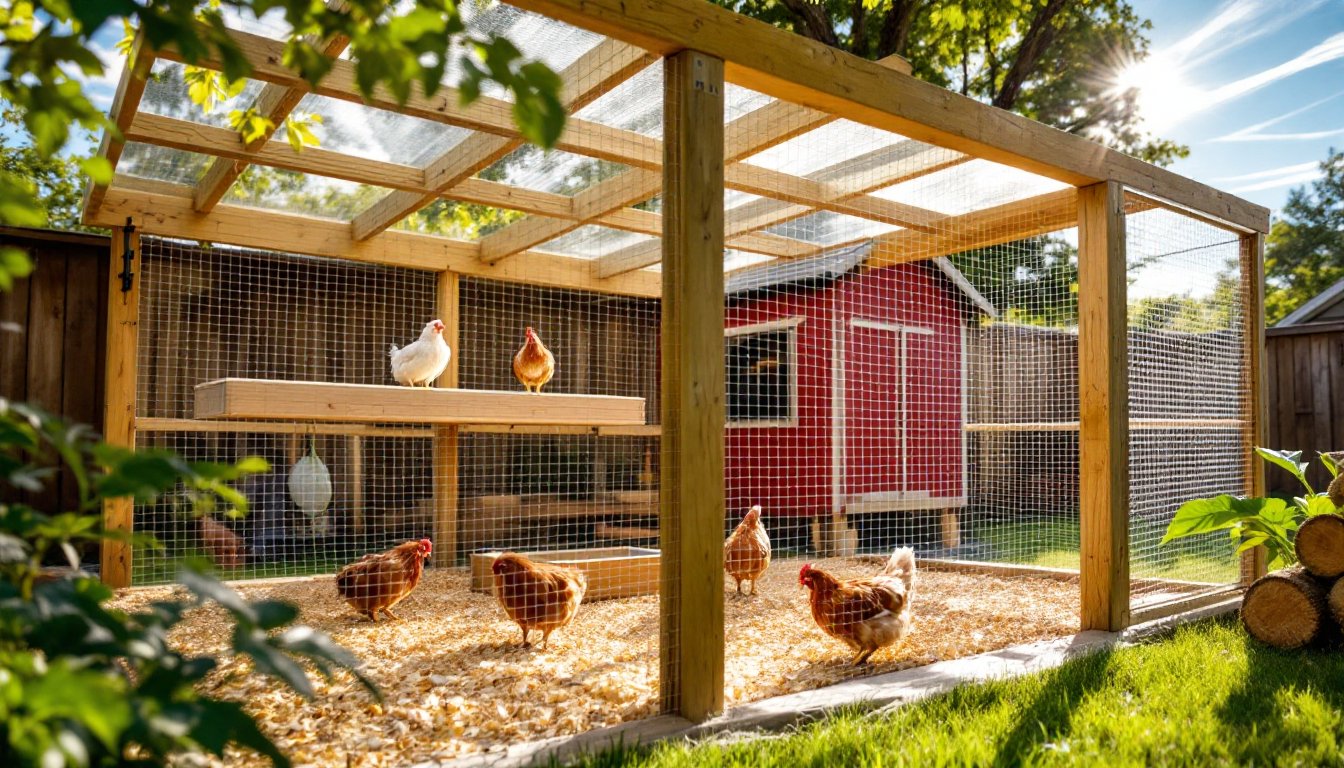
Attaching the run directly to the coop simplifies morning chores and provides all-weather access. Build the frame using 4×4 pressure-treated posts set 24 inches deep in concrete or tamped gravel. Space posts 6-8 feet apart, and run horizontal 2×4 rails at top, middle, and bottom to anchor hardware cloth.
Framing details matter. Use galvanized screws or deck screws, not nails, hardware cloth tension pulls nails loose over time. Overlap cloth sections by at least 4 inches and secure with galvanized staples every 4 inches, then cover edges with 1×2 battens screwed down. This double-fastening stops raccoons from peeling wire back.
For the roof, options include more hardware cloth (expensive but predator-proof), welded wire with 2×2-inch openings (cheaper, blocks hawks), or corrugated polycarbonate panels for weather protection. A sloped roof sheds rain and prevents snow load collapse. Pitch it at least 3:12 (3 inches of rise per 12 inches of run).
Door placement should allow a wheelbarrow or garden cart inside for cleanout. A 3-foot-wide gate with a barrel bolt top and bottom keeps things secure. Install the gate to swing outward, chickens mob inward-opening doors. Many poultry run designs include double-entry vestibules to prevent escapes during access.
Burying hardware cloth 12-18 inches deep or laying an apron flat on the ground and covering it with mulch stops diggers. An apron is faster: lay wire flat, extending 18 inches out from the base, cover with 4 inches of wood chips or soil, and secure the inside edge to the bottom rail. Predators dig down at the fence line and hit wire before they get under.
Budget-Friendly DIY Chicken Run Projects
Reclaimed materials cut costs without sacrificing function. Livestock panels, 16-foot galvanized welded wire sections sold at farm supply stores, run about $25-40 each and need only T-posts (around $5 each) for support. The 4×4-inch openings let in hawks and weasels, so layer hardware cloth on the lower 3 feet and across the top, or use them as an outer perimeter with hardware cloth as an interior layer.
Pallet frames work for walls if the birds are locked in a coop at night. Stand pallets on edge, screw them together at corners, and wrap everything in hardware cloth. Pallets vary in quality, avoid chemically treated ones (look for HT stamps, not MB, which indicates methyl bromide fumigation). They’re not structural enough for a roof load without serious reinforcement, so plan on a tarp or wire-only top.
PVC and EMT conduit keep material costs under $100 for a small run. Drive 4-foot sections of rebar 18 inches into the ground and slide ¾-inch PVC or ½-inch EMT over them as uprights. Connect horizontals with slip tees and elbows, then zip-tie hardware cloth every 6 inches. It won’t stop a dog, but it handles smaller predators and works great as a day run when combined with nighttime coop lockup.
Salvage yards and Craigsearch often have chain-link panels, cattle gates, and old swing set frames for cheap. Chain-link openings are too large, so budget for hardware cloth overlay. When considering budget project ideas, it’s better to spend money on predator protection than aesthetics, a pretty run that loses birds is a failure.
Cost comparison for a 10×10-foot run:
- New lumber and hardware cloth: $400-600
- Livestock panels with T-posts: $200-300
- Reclaimed materials and hardware cloth: $150-250
Prices vary by region and lumber market swings, but hardware cloth remains the single biggest expense at $1.50-3 per square foot.
Creative Covered Run Options for Weather Protection
Clear polycarbonate roofing panels let in light while blocking rain and snow. They’re UV-stabilized, come in 8- to 16-foot lengths, and attach to purlins (2x4s running perpendicular to rafters) with specialized screws that have neoprene washers. Overlap panels by one corrugation and install them with the corrugations running downslope for drainage. A 10×12-foot run needs about $150-200 in panels and fasteners.
Double-layer hardware cloth roofs provide full ventilation and predator security but no weather protection. They work in mild climates or under tree canopy. Use 2×2 or 2×3 lumber for roof framing to keep weight manageable: chickens don’t load a roof, but snow does. In regions with heavy snow, pitch the roof steeper (5:12 or more) or plan to clear it.
Tarp systems are the cheapest option but the least durable. Heavy-duty silver tarps last 1-2 seasons if tied tightly: flapping in wind shreds them. Canvas tarps breathe better and last longer but cost more. For a semi-permanent setup, build a simple gable frame from 2x3s and stretch the tarp over it, screwing through grommets into the frame. It won’t win design awards, but it keeps birds dry for under $50. Those adding covered outdoor spaces often find similar tarp strategies work across multiple projects.
Mixed roofing, half solid, half wire, gives birds a choice. Cover the section closest to the coop with metal roofing or polycarbonate for a dry loafing area, and leave the far end open for dust baths and sun. This approach suits rainy climates where chickens need dry ground even during wet months.
Shade cloth (30-50% density) stapled to the roof frame blocks sun in hot climates while maintaining airflow. It’s not waterproof, so it’s often combined with a smaller solid-roofed section. Pair it with misters or shallow pans for hot-weather cooling.
Landscaping and Enrichment Features for Your Chicken Run
Bare dirt runs turn into mud pits. A 4-6 inch layer of wood chips, straw, or sand improves drainage and makes waste management easier. Sand drains fastest and can be sifted like a litter box: wood chips compost in place and smell better. Avoid cedar or treated wood chips, they’re toxic to chickens.
Chickens destroy grass in weeks, so don’t plan on maintaining lawn inside the run. Instead, plant chicken-safe perennials outside the run and let foliage hang through the wire: comfrey, nasturtium, clover, and oregano all provide greens and pest control. Some keepers install horizontal wire shelves 2-3 feet off the ground and grow pumpkins or squash across the top, vines stay safe, and fruit hangs down within reach.
Dust bath stations are non-negotiable. Chickens need them for pest control and comfort. Build a simple frame from scrap 2x8s or repurpose an old sandbox, and fill it with a mix of construction sand, wood ash, and diatomaceous earth (1 cup DE per 5 gallons of sand). Cover it with a tarp or roof it to keep the mix dry.
Roosts and perches add vertical space. Use 2×4 boards on edge (not 2x2s, which are hard on feet) mounted 18-24 inches off the ground. Space them 12 inches apart, but not directly over feeders or waterers. Chickens poop constantly, especially at night.
Log piles, stumps, and stacked pallets create hiding spots and jumping surfaces, chickens love to hop around and explore levels. An old ladder leaned at 45 degrees gets climbed constantly. These additions reduce boredom and aggression, especially in smaller runs where space is tight. Consider how backyard elements integrate when planning long-term landscape use.
Edible landscaping extends flock enrichment. Plant berry bushes (blueberries, raspberries) outside the run and train branches through the wire. Chickens pick off bugs and fallen fruit, and the plants stay protected from scratching. Sunflowers, if protected during establishment, provide shade and seeds. Many keepers following guidance from resources like The Spruce adapt ornamental garden plans to include poultry-safe plantings.
Hanging cabbage or greens from bungee cords gives birds a moving target to peck. It’s cheap enrichment that keeps them busy for hours. A whole head of cabbage lasts 2-3 days with a small flock.
Conclusion
Building a chicken run blends carpentry, problem-solving, and a realistic look at local predators. The best designs balance security, maintenance access, and flock behavior, not just what looks good in a photo. Start with proven materials like hardware cloth and pressure-treated framing, adapt the size and layout to the yard and bird breed characteristics, and don’t skip the details that stop predators. Every run will need tweaks after the first season, but a solid foundation means adjustments are minor rather than rebuilds.