Table of Contents
ToggleBackyard cottages are gaining popularity among homeowners looking to maximize property value and create flexible living space without the hassle of moving. These compact structures offer versatility, whether someone needs a home office, rental income, or a private guest suite. Unlike a basic shed, a backyard cottage provides climate-controlled, livable square footage that meets local building codes and can serve multiple purposes throughout the years. With careful planning and design, this project can transform underused yard space into a functional, attractive asset that pays dividends in both utility and property value.
Key Takeaways
- Backyard cottage ideas range from modern minimalist designs to rustic cabin-style retreats, each offering distinct aesthetics and construction requirements that suit different property types and homeowner preferences.
- A well-built backyard cottage typically adds more property value than its construction cost, generating rental income within 5-10 years and serving flexible purposes like home offices, guest suites, studios, or gyms throughout its lifespan.
- Successful cottage projects require upfront planning including zoning verification, permit approval (1-3 months), and a realistic budget of $38,000-$84,000 for a 400-square-foot structure, with foundation and mechanical systems being non-negotiable professional investments.
- Smart design features like proper insulation (closed-cell spray foam), egress windows in sleeping areas, mini-split heat pumps, and clustered plumbing minimize costs while maximizing functionality in compact spaces.
- Homeowners can reduce expenses by tackling DIY tasks like interior finishes and landscaping while outsourcing licensed work such as foundation, framing, and electrical/plumbing to avoid costly code violations.
What Is a Backyard Cottage and Why Build One?
A backyard cottage, sometimes called an accessory dwelling unit (ADU), granny flat, or casita, is a secondary structure built on the same lot as a primary residence. These units typically range from 200 to 1,200 square feet and include basic living amenities: a sleeping area, bathroom, and often a kitchenette.
Key differences from sheds or studios: A proper cottage requires a foundation (typically pier-and-beam or slab), insulation meeting local energy codes, and electrical and plumbing systems installed to code. It’s not a garden shed with drywall.
Homeowners build these for several practical reasons. Remote work has driven demand for dedicated office space separated from household distractions. Others use them as rental units, monthly income can offset construction costs within five to ten years, depending on local market rates. Multigenerational living is another driver: aging parents get privacy and independence while staying close. Some simply want a creative studio, gym, or hobby workshop that doesn’t clutter the main house.
Property value impact: Well-built cottages typically add more value than their construction cost, especially in markets with housing shortages. Appraisers treat them as additional square footage, and buyers appreciate the flexibility.
Popular Backyard Cottage Styles to Inspire Your Project
Choosing a design style helps narrow down material and layout decisions early. The two most common approaches offer distinct aesthetics and construction requirements.
Modern Minimalist Cottages
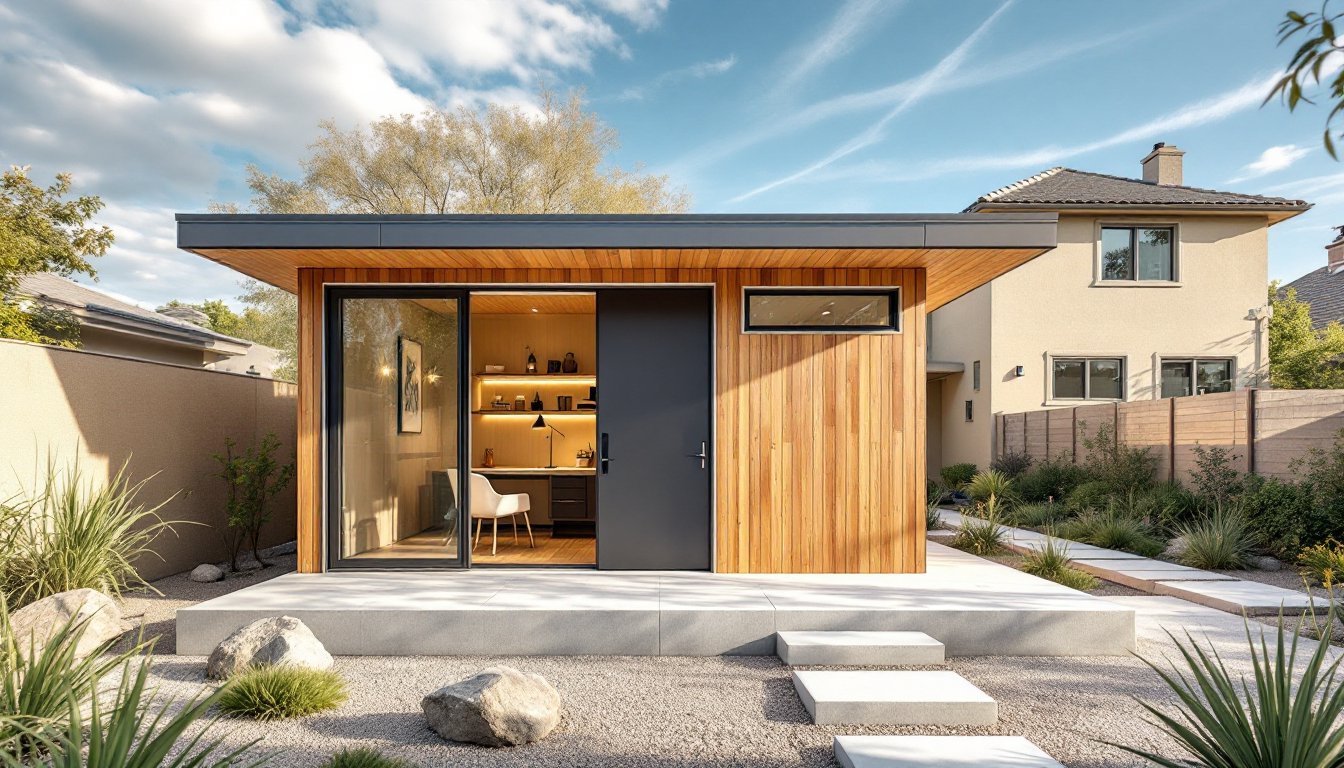
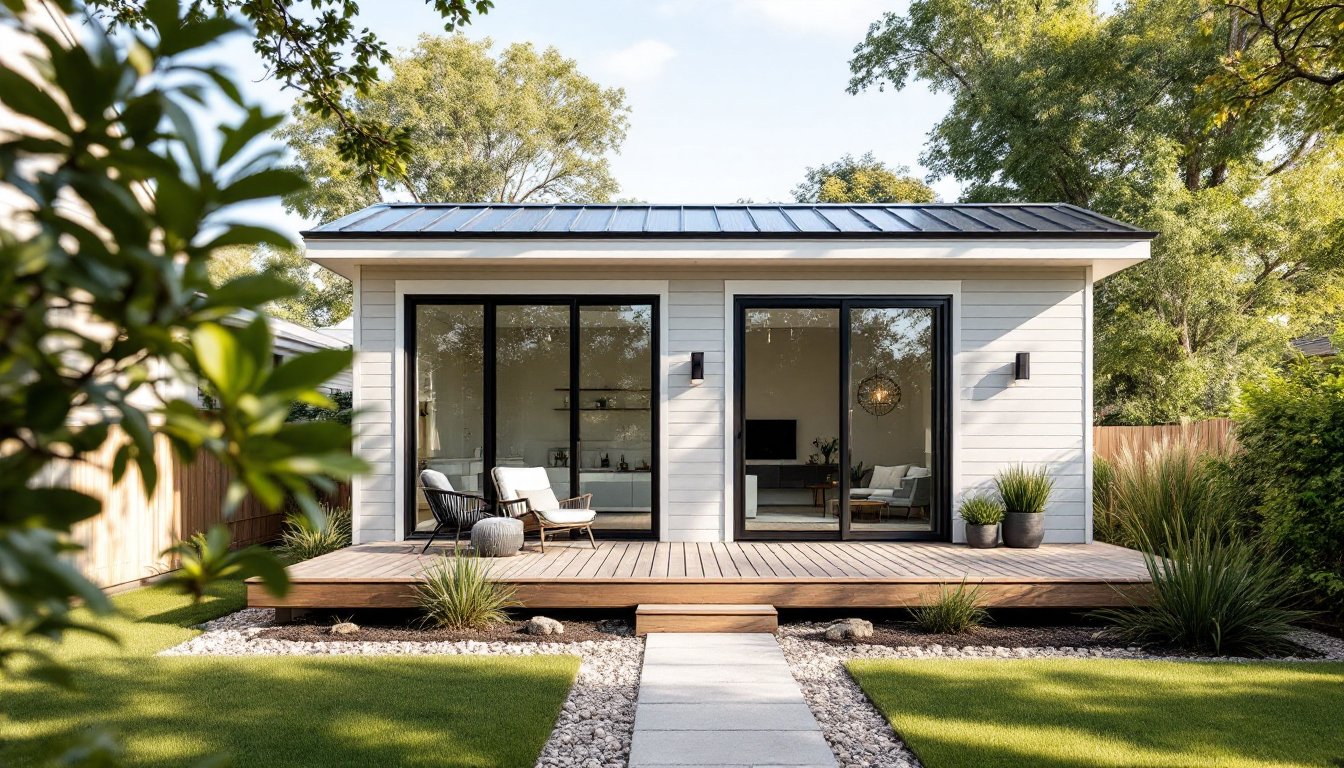
Modern designs emphasize clean lines, large windows, and efficient use of space. Think flat or low-slope roofs, fiber cement or metal siding, and open floor plans. These cottages often feature floor-to-ceiling windows (double-pane, low-E glass to meet energy codes) and sliding glass doors that blur indoor-outdoor boundaries.
Materials lean toward low-maintenance options: Hardie board siding, standing-seam metal roofing, and composite decking. Interiors favor polished concrete or wide-plank engineered flooring, with minimal trim and built-in storage to maximize square footage.
This style works well on urban or suburban lots where zoning allows modern architecture. It also pairs nicely with contemporary main homes. Budget accordingly, large windows and custom millwork add cost, but the payoff is a light-filled space that feels larger than its footprint. Experts at This Old House emphasize that modern ADU designs often require skilled framers familiar with non-traditional roof pitches.
Rustic Cabin-Style Retreats
Rustic cottages channel mountain lodge or farmhouse vibes, using natural materials and traditional building techniques. Expect board-and-batten or cedar shingle siding, steep gable roofs (easier for snow load in colder climates), and covered porches with exposed rafter tails.
Interior finishes include tongue-and-groove pine paneling, reclaimed wood beams, and stone or brick accents around a wood stove or electric fireplace insert. These structures often use conventional stick framing with 2×6 studs for added insulation, important if the cottage will be used year-round.
Rustic doesn’t mean rough. Proper vapor barriers, flashing details, and weatherproofing are critical, especially with wood siding that requires regular maintenance (staining every 3-5 years). This style suits rural or wooded lots and complements older homes or properties with existing outbuildings.
Creative Ways to Use Your Backyard Cottage
The real power of a cottage is versatility. Unlike a single-purpose shed, these structures adapt as needs change.
Home office or studio: A dedicated workspace eliminates commute time and creates professional separation. Include a dedicated circuit for computers and equipment (minimum 20-amp), Ethernet wiring, and adequate insulation for HVAC efficiency. Many municipalities don’t require commercial permits if no clients visit the space.
Rental income: Long-term or short-term rentals generate cash flow. Check local zoning, some areas restrict ADU rentals or require owner-occupancy of the main house. Factor in separate utility metering if the cottage will be rented: shared utilities complicate lease agreements. When planned as a rental, many homeowners also explore budget-friendly outdoor updates to boost curb appeal.
Guest suite: Overnight visitors get privacy, and hosts reclaim their main living space. Include a full bathroom (toilet, sink, shower) and at minimum a mini-fridge and microwave. If building codes allow, a two-burner cooktop and under-counter refrigerator make longer stays more comfortable.
Personal gym or wellness space: Cottages offer enough room for equipment, mirrors, and flooring that can handle dropped weights. Ventilation is key, add a dedicated exhaust fan and consider spray foam insulation to dampen sound transmission to the main house.
Hobby workshop or art studio: Crafters, woodworkers, and artists benefit from natural light and separation from household mess. Include dust collection if woodworking, and verify electrical capacity for kilns, welders, or other high-draw tools. Ground-fault circuit interrupters (GFCIs) are required in workshop settings.
Essential Design Features for a Functional Backyard Cottage
Smart design maximizes usability in a small footprint. Focus on these practical elements before choosing paint colors.
Foundation and framing: Pier-and-beam foundations work on sloped lots and allow underfloor access to utilities. Slab foundations cost less but require perfect grading and embedded plumbing. Frame with 2×6 studs on 16-inch centers for better insulation and structural integrity, important for larger window openings.
Insulation and climate control: Meet or exceed local energy codes. Closed-cell spray foam (R-6 to R-7 per inch) outperforms fiberglass in small spaces where every inch matters. Specify a mini-split heat pump for heating and cooling, these ductless systems install easily and offer zone control without the cost of extending central HVAC.
Windows and natural light: Cottages feel cramped without adequate daylight. Aim for window area equal to 10-15% of floor area. Egress windows are required in any sleeping area per International Residential Code (IRC), minimum 5.7 square feet of opening, 24-inch height, 20-inch width, and sill no higher than 44 inches from the floor.
Plumbing layout: Cluster bathroom and kitchenette along one wall to minimize plumbing runs and cost. Use PEX tubing for water supply, easier to route than rigid copper and less prone to freeze damage. If the cottage is far from the main house sewer line, budget for a sewage ejector pump if gravity drainage isn’t feasible.
Electrical capacity: A 100-amp subpanel is adequate for most cottages. Run underground feeder (UF) cable in conduit from the main panel, buried at least 18 inches deep (or per local code). Include dedicated circuits for HVAC, kitchen appliances, and bathroom GFCI outlets. Many DIYers pair thoughtful interior planning with outdoor entertaining upgrades to create a cohesive backyard experience.
Storage solutions: Built-ins make the most of limited space. Consider under-bed drawers, wall-mounted shelving, and a closet with bifold doors (saves floor space versus swing doors). For outdoor gear, add a small shed or bump-out storage closet accessible from outside.
Planning Your Backyard Cottage: Budget, Permits, and Timeline
Realistic planning prevents mid-project surprises. Start with these critical steps.
Zoning and permits: Contact the local building department before ordering materials. Many jurisdictions limit ADU size (often 50-75% of main house square footage), require setbacks (typically 5-10 feet from property lines), and restrict height (often 15-18 feet max). Some areas mandate owner-occupancy, either the main house or the ADU must be owner-occupied if renting. Permit fees vary widely, from $500 in rural counties to $10,000+ in cities with impact fees.
Design review and approvals: Homeowner associations may have additional restrictions. Submit plans early, approval can take 30-90 days. Hire a licensed architect or designer familiar with local ADU rules: their fee (typically $2,000-$8,000) pays for itself by avoiding code violations and re-work.
Budget breakdown (per square foot): Costs range from $150 to $400+ per square foot depending on finishes, location, and whether someone hires a general contractor or acts as owner-builder. For a 400-square-foot cottage:
- Foundation: $3,000-$8,000 (slab or pier-and-beam)
- Framing and exterior: $15,000-$30,000 (lumber, siding, roofing, windows, doors)
- Mechanical systems: $8,000-$15,000 (electrical, plumbing, HVAC)
- Interior finishes: $10,000-$25,000 (drywall, flooring, cabinets, fixtures)
- Site work: $2,000-$6,000 (grading, utility trenching, pathway)
Total: $38,000-$84,000 for a basic build: custom or high-end finishes push costs higher. Regional labor rates and material availability heavily influence pricing, get multiple bids. Some homeowners reduce expenses by tackling low-cost hardscaping around the cottage themselves.
Timeline expectations: Permit approval: 1-3 months. Foundation and framing: 2-4 weeks. Rough-in (electrical, plumbing, insulation): 2-3 weeks. Inspections and finishes: 3-6 weeks. Total: 4-7 months from permit submission to move-in, assuming no weather delays or supply chain issues.
Financing options: Home equity loans or lines of credit are common, interest may be tax-deductible if the cottage adds to property value. Some lenders offer construction-to-permanent loans that convert to a mortgage after completion. Cash-out refinancing works if there’s existing equity and rates are favorable.
DIY vs. hiring out: Owner-builders can save 20-40% on labor but must manage subcontractors, inspections, and sequencing. Realistically assess skills, foundation work, framing, and electrical/plumbing rough-ins usually require licensed pros. Interior finishes, painting, and landscaping are good DIY opportunities. If going the DIY route, ensure proper personal protective equipment (PPE), safety glasses, work gloves, hearing protection, and a dust mask or respirator for demolition and insulation work.
Utility connections: Budget for trenching and connecting to existing water, sewer, and electrical. If septic capacity is limited, an engineer may need to certify the system can handle additional load, add $1,000-$3,000 for testing and permits.
Backyard cottages deliver long-term value when planned carefully. Treat the project like the permanent structure it is, cutting corners on foundation, insulation, or waterproofing creates expensive problems down the road. When the cottage becomes a backyard lounge retreat or a productive studio, the effort pays off in daily use and resale appeal.