Table of Contents
ToggleA backyard shop isn’t just storage with a door. It’s dedicated square footage where a homeowner can spread out a project, leave a miter saw set up, or cure pottery without fighting for space in the garage. Whether it’s a full woodworking workshop or a simple potting shed, the right backyard structure adds functional workspace that keeps the house cleaner and hobbies more enjoyable. In 2026, modular kits, alternative materials, and flexible design options make it easier than ever to customize a shop that fits both the property and the project.
Key Takeaways
- Backyard shop ideas range from woodworking workshops to pottery studios and potting sheds, each solving the problem of shared garage space and creating dedicated workspace that increases property value and protects hobbies from interruption.
- A concrete slab foundation with proper electrical planning (dedicated 240V circuits for power tools) and adequate lighting (4,000–5,000 lumens per 100 square feet) is essential for functional woodworking and specialized workshops.
- Dust collection systems with 4-inch ducting and proper ventilation prevent health hazards and equipment rust, making them non-negotiable in any serious backyard shop setup.
- Foundation choice—concrete slabs, gravel pads, or skid foundations—directly affects longevity and mobility, with concrete being ideal for permanent, heavy-duty applications and deck blocks offering flexibility for smaller structures.
- Before building, verify local zoning ordinances and permit requirements, as many jurisdictions allow structures under 120 square feet without permits, though electrical work and larger foundations typically require professional installation and inspection.
- Thoughtful layout planning—including door width (6-foot double doors for sheet goods), workbench height (34–36 inches for general work), and window placement (east or north-facing to reduce glare)—prevents costly redesigns after construction.
Why Add a Backyard Shop to Your Property?
Adding a backyard shop solves the problem of shared space. Most garages double as storage units, laundry rooms, and car shelters, leaving little room for actual work. A dedicated shop keeps tools organized, protects projects from interruption, and reduces the dust and noise inside the home.
From a property value standpoint, a well-built outbuilding can increase resale appeal, especially if it’s wired for electricity and built on a proper foundation. Buyers who work from home, pursue hobbies, or need extra storage often prioritize properties with functional outdoor structures.
For serious hobbyists, the shop becomes a creative retreat. Woodworkers can install dust collection systems without worrying about drywall dust in the living room. Potters can run kilns on dedicated circuits. Gardeners get a climate-controlled space to start seedlings. The separation between home and workspace also improves focus, stepping into the shop signals it’s time to build, not scroll.
Before breaking ground, check local zoning ordinances and setback requirements. Many jurisdictions allow structures under 120 square feet without a permit, but rules vary. Electrical work typically requires a permit and inspection, regardless of building size. For larger shops or those on permanent foundations, expect a building permit and possibly impact fees.
Popular Backyard Shop Ideas for Every Need
Woodworking Workshop Haven
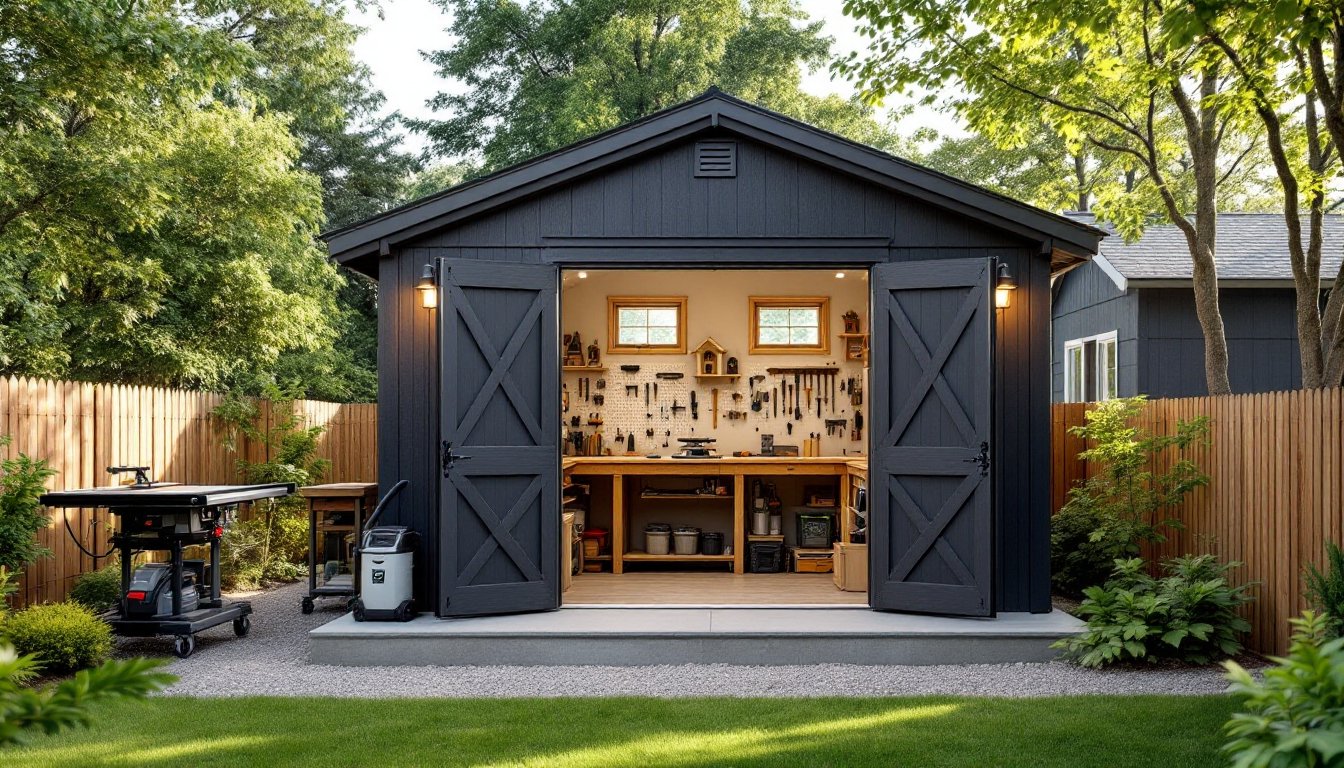
A woodworking shop needs three things: flat floors, good lighting, and enough electrical capacity to run stationary tools. A 12×16-foot footprint provides room for a table saw, workbench, and lumber rack without feeling cramped. Concrete slab foundations are ideal, they stay level, support heavy equipment, and resist moisture better than wood floors.
Electrical planning matters. A serious workshop should have a dedicated 240V circuit for larger tools like table saws or dust collectors, plus multiple 120V outlets on separate circuits. This prevents tripped breakers when running a planer and shop vac simultaneously. Conduit runs and panel upgrades require a licensed electrician and a permit in most areas.
Natural light reduces eye strain, but windows should be placed high or on north-facing walls to avoid glare on workpieces. LED shop lights (4,000–5,000 lumens per 100 square feet) provide even illumination. Insulation improves comfort year-round and reduces condensation that can rust tools. Even in mild climates, a vapor barrier and basic wall insulation make the space more functional. Those interested in woodworking project plans often find that proper shop layout directly impacts build quality.
Dust management is non-negotiable. A central dust collection system with 4-inch ducting captures chips at the source, but a shop vac with a HEPA filter works for smaller setups. Respiratory protection (N95 or better) is still required when sanding hardwoods or MDF, regardless of dust collection.
Pottery and Art Studio
Pottery studios have unique demands: sturdy floors for heavy equipment, water access, and ventilation for kiln fumes. A 10×12-foot shed can accommodate a pottery wheel, worktable, and small kiln, but serious ceramicists should plan for at least 120 square feet to allow drying racks and glaze storage.
Kilns require dedicated electrical circuits, most electric kilns pull 30–50 amps at 240V. This isn’t a DIY electrical job: hire a licensed electrician to run the circuit from the main panel and install a kiln-rated receptacle. Gas kilns need proper venting and may require additional permits.
Water doesn’t need to be plumbed if the shop is close to the house. A 5-gallon bucket and hose work for most tasks, though a slop sink simplifies cleanup. Avoid dumping clay-laden water on the ground, it clogs soil. A settling bucket lets solids drop out before disposal.
Ventilation prevents moisture buildup and fume accumulation. A bathroom exhaust fan (80+ CFM) or a small window with cross-ventilation keeps air moving. For kilns, some potters install downdraft venting systems, but outdoor firing in a well-ventilated space often suffices.
Flooring should handle moisture and clay spills. Sealed concrete works well, as does vinyl plank flooring over plywood. Avoid carpet or unsealed wood, they trap moisture and stain permanently. For those looking for budget-friendly outdoor upgrades, repurposing an existing shed with proper ventilation and electrical can save thousands over new construction.
Garden Tool and Potting Shed
A potting shed is the simplest backyard shop to build, often requiring no electrical, plumbing, or permits if kept under local size limits. A basic 8×10-foot structure provides enough space for a potting bench, tool storage, and shelving for pots and soil bags.
The workbench is the centerpiece. A 36-inch-high bench with a galvanized metal or sealed plywood top handles soil, water, and fertilizer without rotting. Build it deep enough (24 inches) to hold flats and pots without tipping. Under-bench storage keeps bags of compost and mulch off the floor and away from moisture.
Pegboard or slatwall organizes hand tools, while overhead shelves hold seasonal items. Hooks mounted on exposed studs work just as well and cost less. If the shed lacks windows, battery-powered LED strips (solar or rechargeable) provide adequate task lighting without wiring.
Ventilation prevents mold on stored soil and seed packets. A gable vent on each end or a small louvered vent near the roofline allows airflow. If storing powered equipment (mowers, trimmers), elevate them on a pallet or rack to prevent rust from ground moisture.
For gardeners who also entertain, positioning the shed near a well-designed outdoor space keeps tools accessible without cluttering patios or decks.
Design and Layout Considerations for Your Backyard Shop
Foundation choice affects longevity and mobility. Concrete slabs are permanent, level, and support heavy loads, but they require excavation, forms, and curing time. Gravel pads with concrete deck blocks work for smaller sheds and allow relocation if needed. Skid foundations (pressure-treated 4×6 runners) are budget-friendly but require frequent leveling in areas with freeze-thaw cycles.
Door width determines what equipment fits inside. A standard 36-inch door works for hand tools and small machinery, but woodworkers moving sheet goods or table saws need a 6-foot-wide double door or roll-up. Outswing doors save interior space: just check that they don’t violate setback rules when open.
Roof pitch and material impact both aesthetics and function. A 4/12 pitch (4 inches of rise per 12 inches of run) sheds snow and rain while providing headroom. Metal roofing lasts 40+ years and reflects heat, while asphalt shingles match most home styles and cost less upfront. Flat roofs work in dry climates but require more maintenance.
Insulation and climate control extend usable seasons. R-13 fiberglass batts in walls and R-30 in the ceiling keep a shop comfortable in most climates without a major investment. A mini-split heat pump provides both heating and cooling efficiently, though a simple space heater suffices for occasional winter use. Ensure any heating appliance has clearance from combustibles per manufacturer specs.
Window placement affects workflow. East-facing windows capture morning light without afternoon glare, while north-facing windows provide diffuse, even illumination. Avoid placing windows where wall storage or pegboard would be more useful. For DIY enthusiasts tackling projects beyond basic sheds, understanding load-bearing requirements for wall openings is critical.
Essential Features to Include in Your Backyard Shop
Electrical service is the most valuable upgrade. Even a basic shop benefits from four 20-amp circuits: one for lighting, two for outlets, and one for HVAC or dust collection. Run all wiring in conduit for protection and code compliance. If the shop is more than 50 feet from the main panel, voltage drop calculations matter, consult an electrician to determine if you need larger gauge wire.
Workbench height and depth should match the task. General-purpose benches sit at 34–36 inches, comfortable for assembly and hand tool work. For power tool outfeed, match the bench height to the saw table (typically 34 inches for most cabinet saws). Build benches 24–30 inches deep to provide adequate work surface without wasting floor space.
Tool storage keeps the shop functional and safe. Wall-mounted french cleats allow flexible rearrangement of shelves, bins, and tool holders. Drawer units under workbenches organize fasteners and small parts better than open shelves. For power tools, rolling carts (or tools mounted on flip-top stands) maximize floor space in compact shops.
Dust collection and ventilation protect both health and equipment. A two-stage dust collector (1.5–2 HP) handles most small-shop needs, with 4-inch ducting to stationary tools and blast gates to control suction. Portable tools connect to shop vacs via adapters. A box fan with a furnace filter (MERV 13+) provides simple air filtration, set it opposite the door to create cross-ventilation.
Safety equipment should be within arm’s reach. Mount a fire extinguisher (rated ABC, minimum 5 lb.) near the door, not buried behind a table saw. A first-aid kit with bandages, antiseptic, and trauma shears handles common shop injuries. Safety glasses, hearing protection, and a respirator should have dedicated storage where they’re visible and accessible, if they’re buried in a drawer, they won’t get used.
Shelving and storage racks prevent clutter and wasted material. 2×4 lumber racks mounted to wall studs hold long stock horizontally, while vertical racks save floor space for shorter pieces. Metal shelving units (24 inches deep) store paint, finishes, and bins without sagging. Label everything, six months from now, you won’t remember which bin has 1¼-inch screws versus 1½-inch.
For those balancing shop projects with outdoor entertaining spaces, sound insulation (even basic R-13 batts in walls) reduces noise complaints during evening or weekend builds. If the shop doubles as a social space, consider running Ethernet or Wi-Fi for music and project tutorials. Beginners exploring furniture building guides will find that a well-organized shop with proper lighting and dust control makes every project more enjoyable and safer.
Before finalizing the design, walk through a typical project in your head. Where will lumber be cut? Where do finished pieces dry? Can you move a full sheet of plywood from the door to the saw without hitting the workbench? Layout mistakes are easy to fix on paper, expensive to fix after the walls are up.