Table of Contents
ToggleA backyard sidewalk does more than connect the deck to the shed. It manages foot traffic, protects your lawn from compaction, and gives the yard a finished look. Whether navigating wet grass after a rain or directing guests to the patio, a well-placed path solves real problems. This guide covers practical sidewalk options, from poured concrete to mixed materials, with enough detail to help homeowners choose the right approach for their site conditions, budget, and skill level. No fluff, just the materials, methods, and trade-offs that matter.
Key Takeaways
- A well-designed backyard sidewalk reduces erosion, prevents soil compaction, improves safety, and boosts property value by signaling intentional outdoor maintenance.
- Poured concrete is the most durable and cost-effective option for high-traffic areas, lasting decades with minimal maintenance when installed over a compacted gravel base with proper control joints.
- Natural stone, brick, and concrete pavers offer modular installation and classic appeal, but require proper base preparation, edge restraint, and compaction to prevent settling and uneven wear.
- Gravel and mulch paths provide budget-friendly alternatives ($1–$3 per square foot) ideal for garden trails and informal routes, though they require annual maintenance and aren’t suitable for wheelchairs or heavy equipment.
- Mixed-material sidewalk designs combine stepping stones, brick borders, or flagstone with groundcover to balance aesthetics and function while reducing installation complexity and costs.
- Path width should be at least 36 inches for single-file traffic or 48 inches wider for two people to walk side-by-side or accommodate lawn mowers.
Why Your Backyard Needs a Well-Designed Sidewalk
Sidewalks aren’t just cosmetic. They reduce erosion along high-traffic routes, keep mud off shoes, and define functional zones in the yard. A path from the back door to the garage or garden bed prevents soil compaction that kills grass and stunts root growth.
From a safety standpoint, level walkways reduce trip hazards, especially important if the yard has uneven terrain or drainage swales. They also improve accessibility for wheelchrows, lawn equipment, and anyone with mobility challenges.
Finally, a thoughtful sidewalk layout can boost property value. It signals to buyers that the outdoor space is intentional and maintained. Just make sure the path width suits its use: 36 inches minimum for single-file foot traffic, 48 inches or wider if you want two people to walk side by side or accommodate a lawn mower.
Classic Concrete Sidewalk Options
Poured concrete remains the most durable and cost-effective sidewalk material for high-traffic areas. A standard 4-inch-thick slab over compacted gravel base will last decades with minimal maintenance. Expect coverage of about 80 square feet per cubic yard of ready-mix concrete.
Pour a straight run between two points, or add gentle curves using flexible concrete forms. For a more refined look, finish options include broom texture for slip resistance, exposed aggregate, or stamped patterns that mimic stone or tile. Stamped concrete requires a skilled finisher and costs more upfront, but it splits the difference between plain slabs and natural stone in both appearance and price.
Concrete requires control joints every 8 to 10 feet to manage cracking as the slab expands and contracts. Cut these joints with a groover while the concrete is still workable, or saw them in after curing. Reinforcement isn’t always necessary for a residential path, but wire mesh or rebar helps if the subgrade is unstable or if heavy equipment will cross the walk.
One caution: concrete work moves fast once the truck arrives. Line up help, have all tools ready, and know your site’s grade and drainage before the pour. Many homeowners working with inexpensive hardscape solutions find that hiring a concrete crew for the pour and DIYing the prep work offers the best balance of cost and quality.
Natural Stone and Flagstone Pathways
Flagstone delivers an organic look that suits cottage gardens, wooded lots, and informal landscapes. Common materials include bluestone, slate, limestone, and sandstone, each with distinct color and texture. Stone is sold by the ton or by the pallet: one ton typically covers 80 to 120 square feet at 1- to 2-inch thickness, depending on stone type and joint spacing.
For a dry-laid flagstone path, excavate 4 to 6 inches, lay landscape fabric to suppress weeds, then add 2 to 3 inches of crushed stone base (3/4-inch minus) and compact it. Set stones with 1/2- to 2-inch gaps, then fill joints with decomposed granite, polymeric sand, or plant low groundcovers like creeping thyme.
Mortared flagstone over a concrete base provides a more permanent, formal result but requires masonry skills. The concrete slab must cure fully before mortaring stones in place. This approach works well for patios that extend into walkways, creating a continuous hardscape.
Stone is heavy, plan on a hand truck or a helper for anything larger than steppers. Irregular pieces require fitting and trimming with a masonry saw or angle grinder with a diamond blade. Wear safety glasses, gloves, and a dust mask when cutting stone. According to professional hardscaping guides, flagstone paths benefit from a slight crown or cross-slope (about 2%) to shed water and prevent puddling.
Brick and Paver Sidewalk Designs
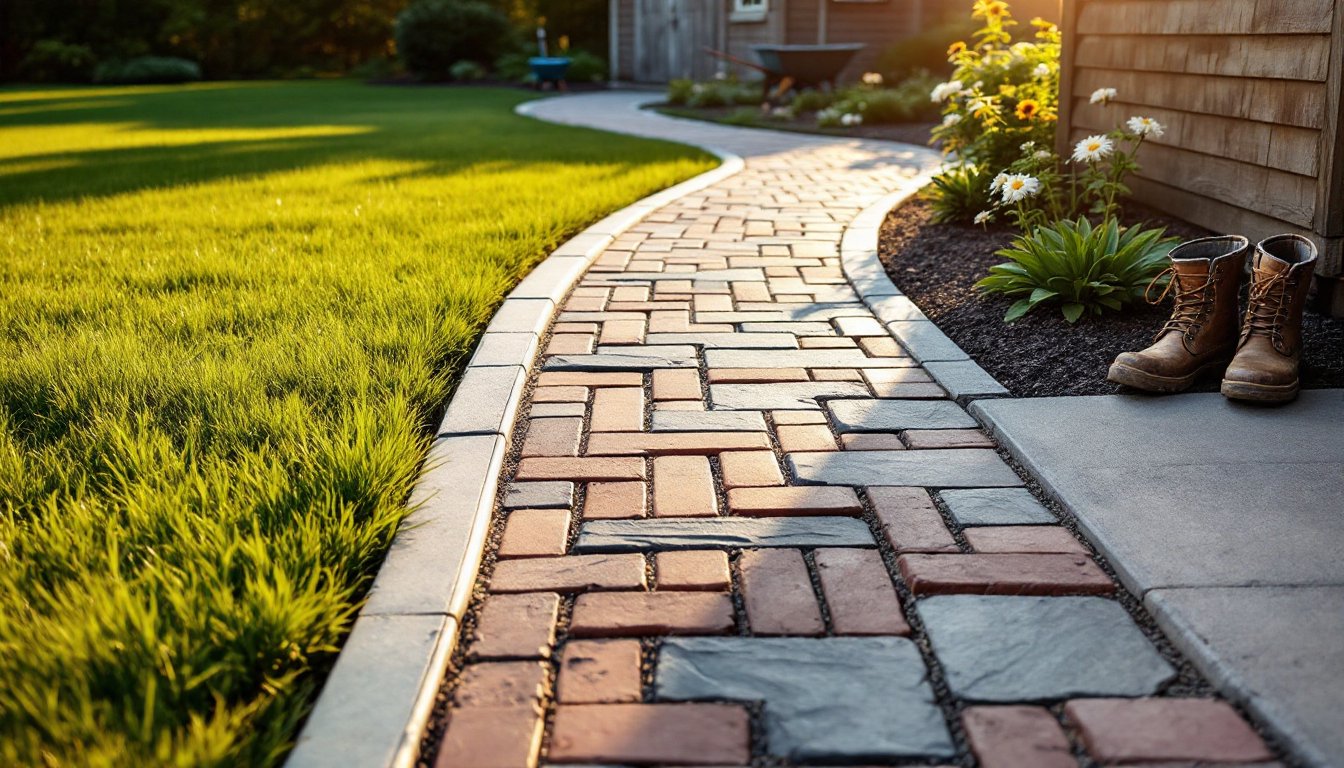
Brick and concrete pavers offer modular installation, easy repairs, and classic appeal. Standard clay bricks measure 3 5/8 × 7 5/8 inches, while concrete pavers come in sizes from 4 × 8 inches up to larger formats. Tumbled or antiqued pavers mimic old-world cobblestone: smooth-face units suit contemporary designs.
Pavers install over a compacted base similar to flagstone: 4 to 6 inches of crushed stone, topped with 1 inch of bedding sand (coarse, not mason sand). Screed the sand level, lay pavers in your chosen pattern, running bond, herringbone, or basketweave, then sweep polymeric sand into the joints and mist with water to lock everything in place. Edge restraint (plastic, aluminum, or concrete curb) is essential to prevent creep over time.
Brick is porous and can spall (flake) in freeze-thaw climates unless it’s rated SW (severe weathering). Concrete pavers handle freeze-thaw better and often cost less per square foot. Both materials allow water to permeate through the joints, which can help with stormwater management if you’re working on larger backyard projects.
A plate compactor (rentable for around $60/day) is worth it for any paver job over 100 square feet. It seats the pavers into the sand and ensures a flat, stable surface. If you don’t compact, the path will settle unevenly within a season.
Budget-Friendly Gravel and Mulch Paths
Gravel and mulch paths deliver function without the material or labor cost of masonry. They’re ideal for garden trails, utility routes, or temporary walks. A basic gravel path costs roughly $1 to $3 per square foot in materials, depending on gravel type and delivery fees.
Pea gravel (3/8-inch smooth stones) is comfortable underfoot but tends to migrate. Crushed stone (3/4-inch angular chips) compacts better and stays in place. For a firmer surface, use decomposed granite (DG) or crusher fines, which pack almost like pavement when wetted and compacted. Mulch paths, wood chips, shredded bark, or pine straw, work well in shaded areas and blend into naturalized landscapes, but they decompose and need topping off every year or two.
Start by excavating 3 to 4 inches, laying landscape fabric to block weeds, then filling with 2 to 3 inches of gravel or mulch. Metal or wood edging keeps material contained. Gravel settles over time, so order 10% extra to top off low spots.
These paths aren’t suitable for wheelchairs or anyone who needs a firm, level surface. But for informal DIY backyard upgrades, they’re fast to install and easy to modify. Gravel also drains instantly, making it a smart choice in areas with heavy runoff or poor soil drainage. Resources like Hunker offer seasonal maintenance tips to keep gravel paths looking sharp.
Creative Mixed-Material Sidewalk Ideas
Combining materials adds visual interest and can solve practical problems. Concrete pavers set in gravel create a stepping-stone effect that’s easier to install than a full paver path. Space pavers at a comfortable stride (roughly 24 inches on center), then backfill with pea gravel or DG.
Brick borders with a gravel center define the path edge while keeping costs down. Lay two courses of brick in sand along each side, then fill the middle with crushed stone. This approach works especially well for curved paths where cutting pavers would be tedious.
Flagstone and groundcover softens the look of stone with living joints. Plant creeping thyme, sedum, or Irish moss between flagstones for a cottage-garden vibe. The plants need sun and occasional weeding, but they’ll tolerate light foot traffic once established.
For a modern twist, try wood rounds or reclaimed timber set in gravel. Use rot-resistant species like cedar or treated lumber rated for ground contact. Rounds should be at least 4 inches thick to resist cracking. Expect a lifespan of 10 to 15 years before replacement.
Mixed materials shine in backyard entertaining zones where the path transitions from lawn to patio. Just keep the primary walking surface consistent, shifting from pavers to gravel mid-stride is a trip hazard. For more project inspiration that balances aesthetics and function, ImproveNet provides cost breakdowns and contractor tips.
Conclusion
Choosing the right backyard sidewalk comes down to site conditions, budget, and how much sweat equity the homeowner wants to invest. Concrete and pavers handle heavy use and last for decades. Gravel and mulch offer flexibility and low cost. Mixed materials bring character without requiring masonry skills. Whichever route taken, proper base prep and drainage make the difference between a path that lasts and one that settles or washes out in the first season.