Table of Contents
ToggleA hot tub sitting exposed in the backyard loses half its appeal the moment weather turns, mosquitoes arrive, or the sun beats down. A well-placed gazebo changes that equation, it creates shade, privacy, and a defined destination that turns a simple soak into a proper backyard retreat. Whether someone wants full enclosure for winter use, a minimalist pergola frame, or a classic peaked roof, the right structure can protect the investment, extend usability, and dramatically improve the aesthetics of the space. This guide walks through the most practical and visually compelling gazebo designs for hot tubs, from budget builds to year-round enclosures.
Key Takeaways
- A backyard hot tub gazebo provides essential protection from UV damage, weather, and debris while extending the tub’s lifespan and usability year-round.
- Wooden gazebos with 6×6 posts, proper footings below the frost line, and at least 6/12 roof pitch offer durable, attractive coverage for hot tub areas.
- Pergola-style covers provide a modern, budget-friendly alternative with partial shade and low maintenance, especially suitable for mild climates.
- Enclosed gazebos designed for year-round use require proper ventilation with ridge vents or exhaust fans to prevent moisture damage and mold growth.
- A simple DIY hot tub gazebo can be built for under $1,000 using corrugated polycarbonate panels on a basic post-and-beam frame.
- Thoughtful design features like 12-volt landscape lighting, privacy screens, and composite flooring transform a functional shelter into an attractive backyard retreat.
Why Add a Gazebo to Your Hot Tub Area?
Installing a gazebo over or near a hot tub solves several functional problems at once. It provides UV protection for both users and the tub’s shell and cover, which can degrade quickly under constant sun exposure. It blocks rain and snow, keeping the area cleaner and more inviting year-round. Privacy is another major benefit, strategic placement of lattice, curtains, or solid walls can screen views from neighbors without sacrificing airflow.
A gazebo also defines the space visually. Instead of a hot tub sitting alone on a concrete pad, the structure creates a focal point and signals intentional design. For homeowners planning to enhance backyard entertaining, a gazebo frames the hot tub as part of a larger outdoor living zone rather than an afterthought.
Finally, a roof overhead means less debris in the water, fewer leaves, seeds, and bird droppings translate to less filter maintenance and chemical use. That alone can justify the build cost over time.
Classic Wooden Gazebo Designs for Hot Tubs
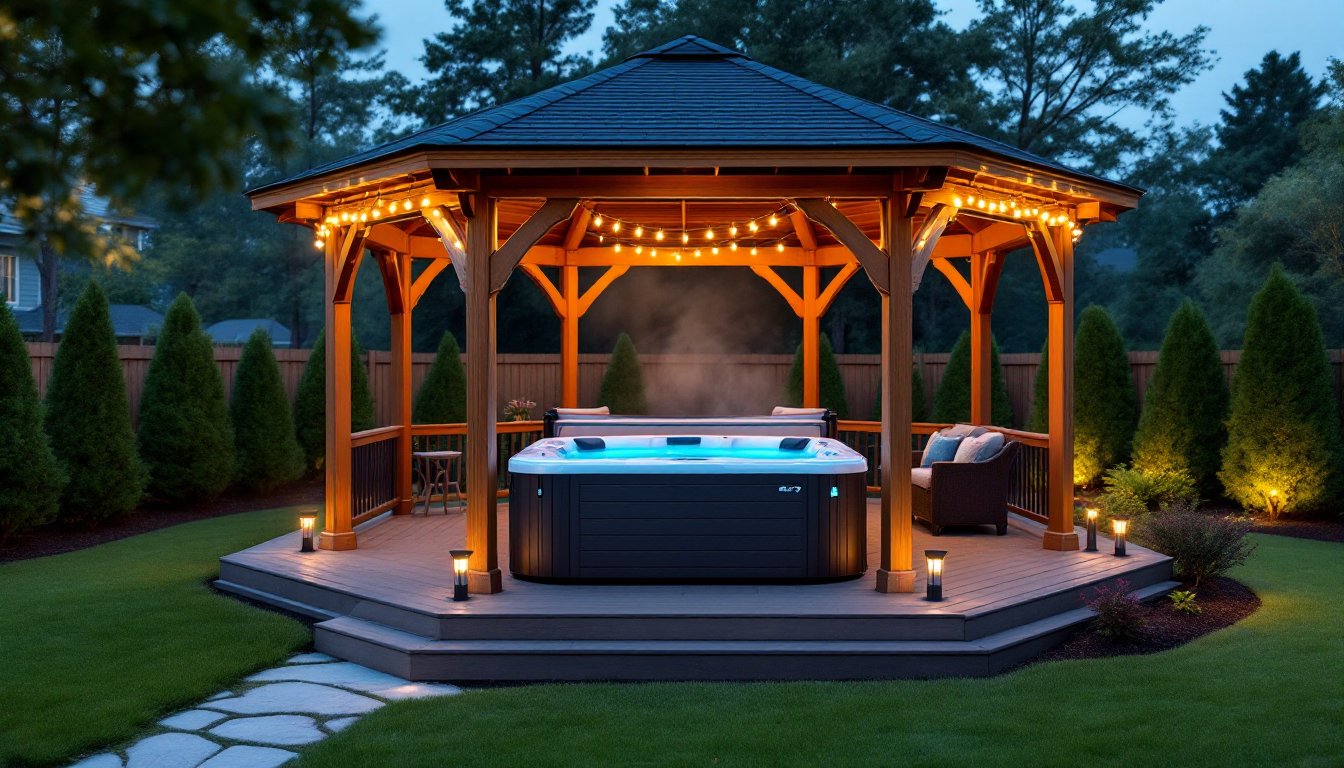
Traditional wooden gazebos, typically octagonal or square with a peaked roof, remain popular for good reason. They offer full overhead coverage, ample headroom, and enough visual weight to anchor a landscape. Most DIY kits or custom builds use pressure-treated pine, cedar, or redwood for the frame, with asphalt shingles or metal roofing on top.
Key structural considerations:
- Footings and posts: Use 6×6 posts set in concrete footings below the frost line (check local frost depth requirements). Hot tub gazebos carry roof loads plus potential snow accumulation, so undersized footings can lead to settling or tilt.
- Floor framing: If building a raised platform, use 2×8 or 2×10 joists spaced 16 inches on center to support the combined weight of the tub, water, and occupants, typically 3,000 to 6,000 pounds for a mid-size spa.
- Roof pitch: A 6/12 or steeper pitch sheds snow and rain more effectively than a shallow slope. Steeper roofs also provide better ventilation, which matters in a humid environment.
Cedar and redwood naturally resist rot and insects, making them ideal for wet environments. Pressure-treated lumber is more affordable but requires annual sealing to prevent moisture damage. Either way, allow ½ inch clearance around the hot tub perimeter for access to service panels and plumbing.
For a cleaner look, many builders add decorative railings between posts at waist height, using balusters or horizontal slats. This adds visual interest without blocking sightlines entirely.
Modern Pergola-Style Hot Tub Covers
Pergolas offer a lighter, more contemporary alternative to enclosed gazebos. They provide partial shade, define the space, and support climbing plants or retractable canopies without the bulk of a solid roof. This style works especially well in climates with mild winters or where full enclosure isn’t necessary.
Typical pergola construction uses 4×4 posts with 2×6 or 2×8 cross beams and 2×2 or 2×4 rafters spaced evenly across the top. Homeowners looking for budget-friendly backyard upgrades often choose pergolas because they require less material and can be assembled in a weekend with basic carpentry skills.
Popular material choices include:
- Pressure-treated lumber: Affordable and widely available. Stain or paint to match existing decking.
- Composite materials: Low-maintenance and resistant to moisture, but more expensive upfront.
- Aluminum or vinyl kits: Virtually maintenance-free, though less customizable.
To increase shade coverage, add a retractable fabric canopy on a track system or grow wisteria, grapevines, or climbing roses over the rafters. The open-beam design allows steam and moisture to escape freely, reducing mildew risk compared to fully enclosed structures.
One practical upgrade: install string lights or low-voltage LED strips along the beams for evening ambiance. Run wiring through conduit before final assembly to keep it protected and code-compliant.
Enclosed Gazebo Ideas for Year-Round Use
For homeowners in colder climates or those who want true four-season usability, an enclosed gazebo with walls, windows, and climate control transforms a hot tub into a year-round retreat. This approach requires more planning, ventilation, insulation, and moisture management become critical.
Wall materials typically include:
- Removable or sliding panels: Polycarbonate, acrylic, or tempered glass panels on tracks allow seasonal flexibility. Remove them in summer for open-air soaking, reinstall for winter.
- Fixed walls with operable windows: Framed walls with casement or awning windows provide better insulation but less flexibility.
- Screen panels: For three-season use, screens keep insects out while allowing airflow.
Ventilation is non-negotiable. A hot tub releases significant moisture and heat. Without adequate airflow, condensation will rot wood, fog windows, and encourage mold. Install ridge vents or a powered exhaust fan rated for high humidity (look for models rated IP44 or higher for wet locations). Building codes may require mechanical ventilation if the space is fully enclosed, check local requirements.
Insulation adds comfort but complicates construction. Use closed-cell spray foam or rigid foam board between studs, and cover interior walls with moisture-resistant drywall or tongue-and-groove cedar. A small electric or propane heater can maintain comfortable air temperature, though the tub itself radiates plenty of warmth in a well-insulated space.
Structurally, enclosed gazebos often need to meet the same building codes as an accessory dwelling unit (ADU). Expect to pull permits for electrical, plumbing, and structural work, and budget for inspections. This isn’t a weekend project, plan for several weeks of work or hire a contractor for framing and mechanicals.
Budget-Friendly DIY Hot Tub Gazebo Projects
Not every gazebo needs a five-figure budget. A simple post-and-beam shelter with a corrugated metal or polycarbonate roof can be built for under $1,000 in materials, depending on size and region.
Minimalist shade structure:
- Set four 4×4 posts in concrete footings at the corners of the hot tub, leaving 6–12 inches clearance on all sides.
- Attach 2×6 beams across the top, securing with galvanized or stainless steel carriage bolts.
- Lay corrugated polycarbonate panels across the beams, overlapping edges by one corrugation. Fasten with rubber-gasketed screws designed for polycarbonate (standard screws will crack the material).
- Seal all seams with silicone caulk rated for outdoor use.
This design provides rain and sun protection without a permit in many jurisdictions (check local rules, structures under 120 square feet often qualify as exempt). For additional shade, homeowners can attach outdoor fabric or bamboo screens to the sides with eye hooks and carabiners.
Repurposed gazebo kits are another cost-effective route. Metal or soft-top gazebos sold at big-box stores (often $300–$600) can be modified for hot tub use. Reinforce the frame with additional stakes or concrete footings, and replace the fabric top with something more durable if needed. These kits aren’t designed for heavy snow loads, so they work best in mild climates.
Safety note: Always use galvanized or stainless steel fasteners in a hot tub environment. Standard steel screws and nails will rust quickly and stain wood or drip rust onto the tub shell.
Design Features That Elevate Your Hot Tub Gazebo
Once the basic structure is up, thoughtful details make the difference between a functional shelter and a true backyard destination.
Lighting: Install 12-volt landscape lighting or hardwired fixtures on a dedicated circuit with GFCI protection. Recessed lights in the ceiling beams, strip lights along railings, or pendant fixtures over entry points all work well. Avoid standard indoor fixtures, they’re not rated for moisture.
Privacy screens: Lattice panels, louvered shutters, or outdoor curtains add privacy without creating a boxed-in feeling. For homeowners planning entertaining spaces, adjustable screens allow flexibility depending on the occasion.
Seating and storage: Built-in benches or a small deck extension create room to set towels, drinks, or speakers. Weatherproof storage boxes keep chemicals, filters, and accessories organized and out of sight.
Flooring upgrades: Pea gravel, pavers, or composite decking beats bare dirt or grass. Whatever surface is chosen, it should be slip-resistant when wet and drain freely. Avoid solid concrete directly under the tub, it’s hard on feet and doesn’t drain well.
Electrical access: Run a dedicated circuit for hot tub power (most require 240V service), and add a weatherproof outlet for lights, music, or a small refrigerator. All outdoor electrical work must meet NEC (National Electrical Code) standards, including GFCI protection. Hire a licensed electrician unless comfortable working with 240V systems, mistakes can be fatal.
Roof overhangs: Extend the roofline 12–18 inches beyond the posts to keep rain off the structure’s edges and reduce water infiltration at post connections.
Conclusion
A well-designed gazebo turns a backyard hot tub into a true retreat, protected from weather, private from neighbors, and visually integrated into the landscape. Whether someone chooses a classic wood frame, a minimalist pergola, or a fully enclosed four-season structure, the key is matching the design to climate, budget, and how the space will actually be used. With proper materials, solid framing, and attention to ventilation and drainage, a hot tub gazebo can deliver years of reliable service and significantly increase time spent outdoors.