Table of Contents
ToggleArizona’s desert climate doesn’t limit landscaping, it redefines it. With scorching summers, minimal rainfall, and soil that’s more caliche than loam, homeowners can’t rely on Kentucky bluegrass and rhododendrons. But that’s not a problem. Desert landscapes offer bold textures, year-round color, and minimal water use when designed right. This guide walks through the essentials: plant selection that survives 115°F days, hardscaping that stays cool underfoot, shade structures that actually work, and irrigation strategies that won’t drain the aquifer or the wallet. Whether starting from scratch or retrofitting a thirsty lawn, these strategies work with Arizona’s climate, not against it.
Key Takeaways
- Arizona backyard landscape ideas thrive when designed with native and adapted plants like palo verde, ocotillo, and agave that survive extreme heat and require minimal water compared to traditional lawns.
- Hardscaping using decomposed granite, flagstone, and permeable pavers reduces water use and maintenance while keeping outdoor spaces cooler and more functional year-round.
- Strategic shade structures such as shade cloth on pergolas, shade sails, and living trees are essential to make Arizona backyards usable during scorching summers (May-September).
- Drip irrigation systems with smart controllers can cut water consumption by 30-50% compared to traditional spray irrigation while keeping desert plants thriving on seasonal schedules.
- Grouping plants by water needs and avoiding water hogs like hybrid tea roses ensures sustainable landscapes that work with Arizona’s climate rather than fighting it.
Why Arizona Backyards Require a Unique Approach
Arizona backyards face conditions most landscaping books ignore. Summer temperatures regularly exceed 110°F, with ground-level hardscape hitting 160°F or hotter. Annual rainfall averages 7-13 inches depending on location, with months-long dry spells. Soil composition varies wildly, decomposed granite in some areas, alkaline clay or caliche hardpan in others, all of which drain poorly or require amendment.
Traditional turf lawns demand 55-60 inches of water annually in Phoenix, forcing homeowners to irrigate constantly just to keep grass alive. That’s not sustainable in a region where water costs rise and drought restrictions tighten. Native and adapted desert plants, by contrast, thrive on 12-18 inches per year once established.
There’s also the sun exposure factor. Unlike temperate climates where south-facing yards get pleasant warmth, Arizona backyards bake relentlessly from May through September. Without intentional shade planning, outdoor spaces become unusable during peak hours. Successful Arizona landscapes embrace these realities: they prioritize heat-tolerant plants, permeable hardscaping, strategic shade, and water-conserving irrigation.
Desert-Friendly Plants That Thrive in Arizona Heat
Selecting plants adapted to desert conditions eliminates the constant battle against climate. Start with native species that evolved in Arizona’s ecosystems. Palo verde trees provide filtered shade and vibrant spring blooms without requiring supplemental water after the first year. Ocotillo adds dramatic vertical interest with seasonal red flowers. Desert marigold and brittlebush offer low groundcover with bright yellow blooms.
For structured accents, cacti and succulents deliver. Golden barrel cactus works well in clusters or as focal points. Agave varieties, from compact ‘Blue Glow’ to larger century plants, provide architectural form. Prickly pear tolerates neglect and produces edible fruit. Position these in areas with full sun and excellent drainage: soggy roots kill desert plants faster than drought.
Adapted non-natives expand options. Texas ranger (Leucophyllum) blooms purple after monsoon rains and needs minimal water. Red yucca sends up coral flower spikes spring through fall and tolerates reflected heat from pavers. Mexican honeysuckle attracts hummingbirds and handles part shade. Recent desert garden design trends emphasize layering plant heights and textures for year-round visual interest.
Avoid water hogs. Skip hybrid tea roses, fescue grass, and hydrangeas unless prepared to irrigate heavily and amend soil constantly. Stick to USDA Zone 9-10 plants labeled drought-tolerant or xeric. Check actual vs. nominal spacing, desert plants often need more room than labels suggest due to heat stress and root competition.
Hardscaping Solutions for Low-Maintenance Beauty
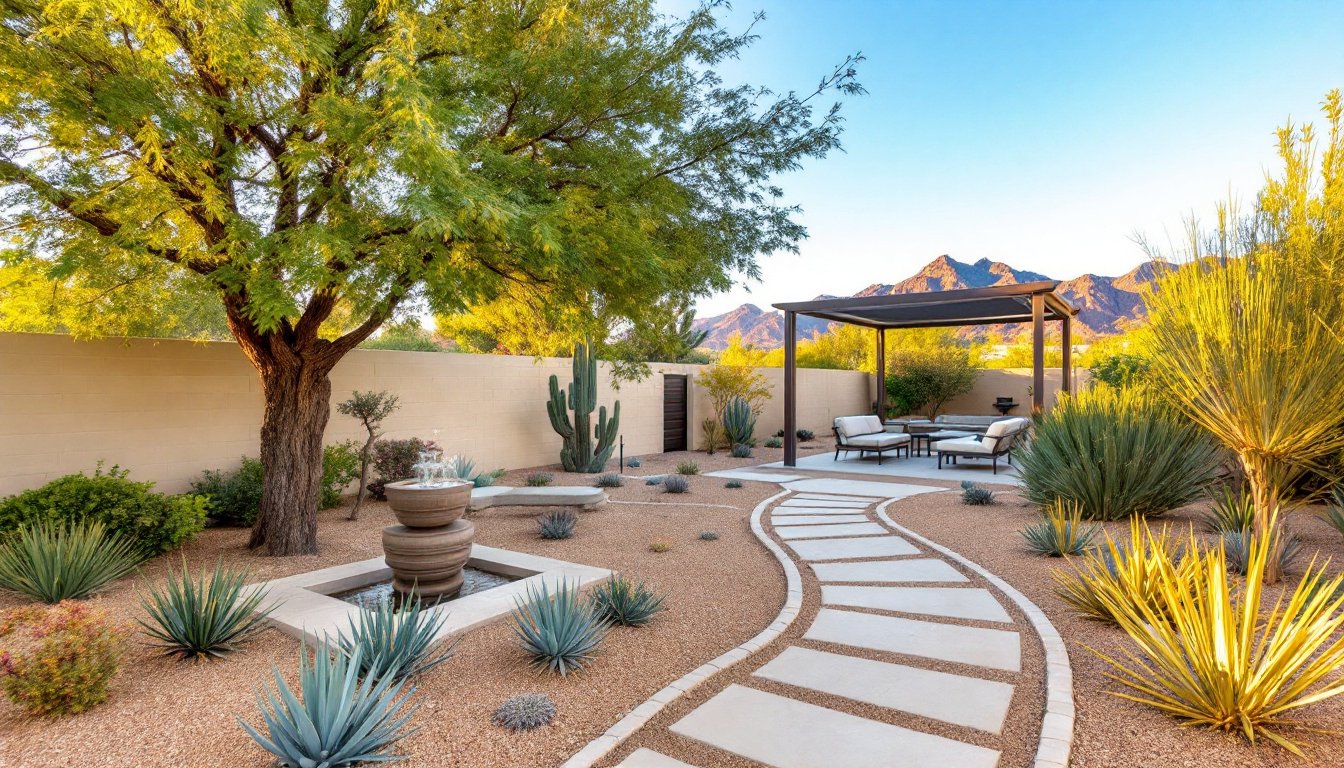
Hardscaping carries Arizona landscapes. It reduces water use, defines spaces, and handles foot traffic without turning to mud or dust. Decomposed granite (DG) is the workhorse material: affordable, permeable, and available in tan, gold, or gray tones. A 3-inch compacted base with stabilizer additive prevents erosion and stays put through monsoons. Expect coverage of about 100 square feet per ton for pathways and patios.
For a more finished look, flagstone or pavers work well. Flagstone (typically sandstone or limestone) comes in irregular pieces or cut rectangles. Set on a gravel base with polymeric sand joints, it stays cooler than concrete and weathers naturally. Concrete pavers offer uniform sizing and interlock tightly, ideal for high-traffic zones. Choose light colors, tan, buff, or gray, to reflect heat: dark pavers become griddles by noon.
Incorporate gravel beds around plantings. River rock (1-3 inch diameter) or crushed granite suppresses weeds, retains soil moisture, and eliminates the need for mulch that blows away in wind. Skip lava rock unless going for a 1980s vibe: it’s fallen out of favor and offers no advantage over river rock.
Edge all hardscape areas with steel or aluminum landscape edging to prevent migration. Plastic edging warps in heat. For budget-conscious projects, DG pathways with rock borders deliver a clean look without the cost of pavers.
Safety note: Hardscape gets dangerously hot. Test surface temperatures before letting kids or pets walk barefoot. Consider shade sails or pergolas over patios to drop surface temps 20-30°F.
Creating Shade and Cooling Your Outdoor Living Space
Shade isn’t optional in Arizona, it’s survival. Without it, backyards sit empty from May through September. Ramadas (open-roof structures with widely spaced beams) provide a traditional look and some relief, but they’re more decorative than functional at midday. For serious shade, go with solid-roof options: attached patio covers with insulated panels or freestanding pergolas fitted with shade cloth.
Shade cloth comes in density ratings from 30% to 90%. For Arizona, 70-80% blocks enough UV and heat without creating a cave. Attach it to a pergola frame with grommets and zip ties or a track system for seasonal removal. Knitted polyethylene fabric lasts 7-10 years: cheap woven tarps disintegrate in two seasons.
Shade sails offer a modern alternative. These tensioned fabric triangles or squares mount to posts or building eaves at varying heights. Use UV-rated HDPE fabric in light colors for maximum reflectivity. Installation requires solid anchor points, lag bolts into wall studs or posts set in concrete footings at least 24 inches deep. Tension hardware (turnbuckles and carabiners) allows seasonal adjustment.
For living shade, fast-growing trees help but take time. Palo verde, mesquite, and desert willow grow 2-3 feet per year in ideal conditions. Position them on the west side of patios to block late-day sun. Avoid planting too close to hardscape: roots will heave pavers within five years.
Misting systems cool air by evaporative action, effective in low humidity but less so during monsoon season. A basic patio misting kit runs $100-$200 and connects to a standard hose bib. Set timers to activate 10 minutes before outdoor use. If considering a hot tub installation, place it in a shaded zone to reduce water evaporation and chemical breakdown from UV exposure.
Water-Wise Features and Smart Irrigation
Arizona landscapes can include water features without guilt, if done right. Bubblers and fountain basins recirculate water rather than consuming it. A small urn fountain loses about 1-2 gallons per week to evaporation, far less than a lawn sprinkler uses per day. Use a pond pump (50-200 GPH) on a timer to minimize runtime. Position features in shade to reduce evaporation.
Skip traditional spray irrigation for plantings. Drip irrigation delivers water directly to root zones with 90%+ efficiency. Use inline emitter tubing (0.6 or 0.9 GPH per foot) for groundcover and individual emitters (1-4 GPH) for shrubs and trees. Run zones based on plant needs, native plants may need water once every 10-14 days in summer, while adapted species need twice weekly.
Install a smart irrigation controller to adjust watering based on weather and soil moisture. Models from Rachio or Rain Bird sync with local weather stations and pause schedules during rain or high humidity. In Phoenix, this can cut water use by 30-50% compared to timer-based systems. Most municipal rebate programs offset controller costs.
Rainwater harvesting makes sense in monsoon country. A simple setup: route roof downspouts to buried 50-gallon plastic drums or above-ground cisterns. Use harvested water for hand-watering new plantings or filling fountain basins. For code compliance, check local regulations, some jurisdictions require backflow preventers if connecting to drip systems.
Group plants by water needs. High-use plants (citrus, herbs, vegetables) should be isolated in a dedicated zone near the house. Keep low-water natives and succulents in separate zones to avoid overwatering. Overwatering kills desert plants faster than drought.
Designing Functional Zones for Year-Round Enjoyment
Arizona’s climate allows outdoor use 9-10 months per year if spaces are planned for seasonal shifts. Zone the backyard by function: cooking and dining, lounging, play areas, and gardening.
Cooking and dining zones work best near the house for utility access. A built-in grill island with a concrete countertop and storage below handles high heat without warping. Add a pergola or ramada overhead for shade. If working with limited square footage, a portable grill and foldable dining set keep options open.
For lounge areas, low seating around a fire feature creates ambiance for cooler months (October–April). Propane or natural gas fire tables provide adjustable heat without sparks or ash. Surround with weather-resistant furniture, powder-coated aluminum frames with solution-dyed acrylic cushions resist fading and mildew.
Play zones need shade and soft landing surfaces. Artificial turf rated for high temps (180°F surface tolerance) works under play structures, though it still heats up. An alternative: rubberized mulch or pea gravel (3-6 inch depth) over landscape fabric. String lights or low-voltage path lighting extends usability into evenings, LEDs stay cool and draw minimal power.
If planning a full outdoor entertaining area, integrate multiple zones with defined pathways. Decomposed granite or flagstone walks connect spaces visually. Container gardening in strategic spots, raised planters with herbs, peppers, or succulents, adds greenery without committing to in-ground beds.
Don’t forget utility screening. Use decorative metal panels or bamboo fencing to hide AC units, pool equipment, or trash cans. Vertical elements add privacy without eating up square footage.
Conclusion
Arizona backyards reward those who work with the desert, not against it. By choosing heat-adapted plants, maximizing hardscaping, creating functional shade, and installing efficient irrigation, homeowners build outdoor spaces that require less water, less maintenance, and less frustration. The result isn’t compromise, it’s a landscape that looks sharp year-round and actually gets used, even in July.