Table of Contents
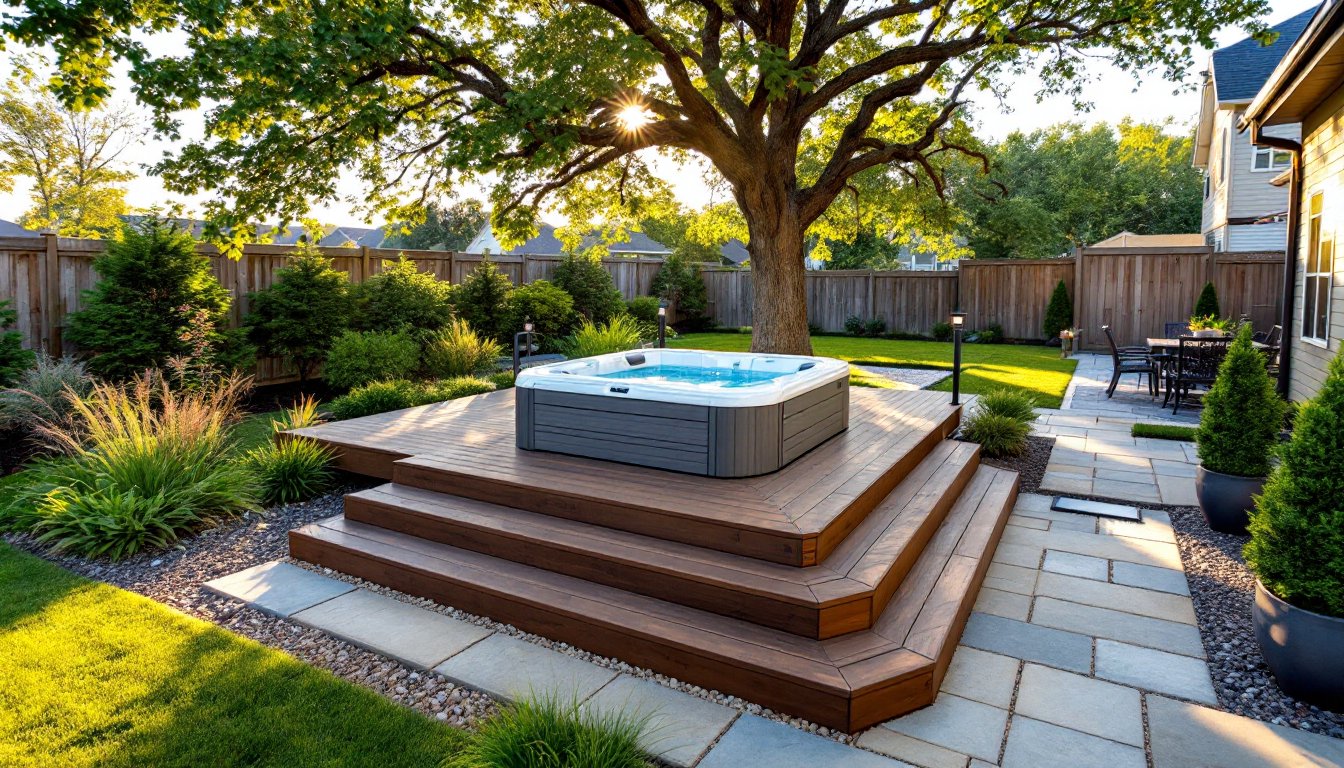
ToggleA hot tub is an investment in relaxation and backyard enjoyment, but the surround, what goes under and around the tub, turns it from a standalone appliance into an intentional outdoor retreat. The right surround handles water runoff, resists mildew, supports the tub’s weight (which can exceed 4,000 pounds when full), and sets the visual tone for the entire space. Whether it’s natural wood, stone pavers, composite decking, or a simple gravel bed, the surround deserves as much planning as the hot tub itself. This guide walks through proven surround materials, installation realities, and design considerations to help homeowners build a safe, functional, and attractive hot tub setup.
Key Takeaways
- A proper hot tub surround provides structural support for 3,000–5,000 pound loads, moisture management, and visual integration into your backyard design.
- Natural wood decking offers classic warmth but requires annual sealing and maintenance, while composite decking delivers a wood-like appearance with virtually no upkeep for a higher upfront cost.
- Stone pavers and concrete provide elegant durability and low maintenance, making them ideal for creating a high-end hot tub surround that integrates naturally with hardscape elements.
- Gravel and rock gardens are the most budget-friendly hot tub surround options but work best in secondary circulation zones rather than high-traffic areas.
- Before installation, verify your tub’s weight requirements, check local building codes and permits (especially for electrical work), plan drainage with a 1/4-inch-per-foot slope, and ensure adequate access for equipment delivery.
Why Your Hot Tub Surround Matters More Than You Think
The surround does three critical jobs: structural support, moisture management, and visual integration. Hot tubs weigh between 3,000 and 5,000 pounds when filled with water and occupants, so the base must be level, stable, and designed to handle concentrated point loads. Most manufacturers require a reinforced concrete pad at least 4 inches thick or a deck structure with joists spaced 12 to 16 inches on center, depending on the tub’s footprint and local building codes.
Moisture is the second challenge. Hot water splashes, wet feet, and steam create a high-humidity zone that promotes rot, algae, and slip hazards. The surround material needs proper drainage, either through gaps in decking boards, permeable pavers, or a graded concrete slab, so standing water doesn’t collect.
Finally, the surround ties the hot tub into the broader backyard design. A thoughtfully chosen material can make the tub feel like a natural extension of a patio, garden, or outdoor entertaining area rather than an awkward afterthought. The surround sets the stage for lighting, privacy screens, planters, and seating, so it’s worth planning upfront.
Natural Wood Decking: Classic Warmth and Versatility
Pressure-treated lumber and naturally rot-resistant species like cedar or redwood remain popular for hot tub surrounds because they’re warm underfoot, easy to cut and fasten, and blend seamlessly with traditional deck construction. Pressure-treated southern yellow pine rated for ground contact (use-category UC4A) is the most affordable option, running $2 to $4 per linear foot for 5/4×6 decking. Cedar and redwood cost more, $4 to $8 per linear foot, but age to a silver-gray patina and resist splintering better than pine.
Framing for a wood surround follows standard deck practices: set 4×4 or 6×6 posts on concrete footings below the frost line, install 2×8 or 2×10 joists on 12-inch centers for hot tub areas, and fasten decking with gap spacing of 1/4 inch to allow drainage and thermal expansion. Because hot tubs generate constant moisture, consider using stainless steel or coated deck screws instead of nails to avoid rust stains.
Maintenance is the trade-off. Wood decking requires annual cleaning, inspection for rot or loose fasteners, and resealing every two to three years with a water-repellent stain or clear sealer. Skipping this step invites mildew, warping, and premature failure. If maintenance isn’t appealing, consider composite or PVC decking instead.
Stone and Pavers: Elegant Durability for Any Style
Natural stone and concrete pavers offer exceptional longevity and a high-end look without ongoing refinishing. Bluestone, flagstone, travertine, and slate are common choices for hot tub surrounds, each with distinct color palettes and textures. Bluestone is dense, slip-resistant when honed, and widely available in the Northeast. Travertine has a lighter, textured surface that stays cooler underfoot in hot climates. Flagstone works well for irregular, natural layouts.
Concrete pavers, available in modular sizes from 12×12 inches to 24×24 inches, are more affordable (typically $3 to $8 per square foot installed) and easier to replace if one cracks. They come in dozens of colors and finishes, including tumbled edges that mimic natural stone.
The base matters as much as the stone. Excavate to a depth of 6 to 8 inches, lay 4 inches of compacted crushed stone, top with 1 to 2 inches of leveling sand, and set pavers with polymeric sand in the joints to lock them in place and resist weed growth. For heavy hot tubs, some installers pour a concrete slab base and set pavers in mortar for added stability.
Stone surrounds handle freeze-thaw cycles well if properly installed, and they pair naturally with inexpensive hardscape elements like gravel paths and low-voltage lighting. Design inspiration for stone layouts can be found on platforms like HGTV, which showcases professional installations and material combinations.
Composite Decking: Low-Maintenance Luxury
Composite decking, made from recycled wood fiber and plastic resin, delivers the look of wood with virtually no maintenance. Brands like Trex, TimberTech, and Fiberon offer capped composite boards that resist fading, staining, scratching, and mold growth. They’re ideal for homeowners who want the warmth of a wood surround without the annual sealing ritual.
Composite boards are available in grooved or solid-edge profiles. Grooved boards use hidden fasteners for a clean, screw-free surface, while solid-edge boards can be face-screwed or hidden-fastened depending on the system. Most composites come in 12-, 16-, or 20-foot lengths and widths ranging from 5.5 to 7.25 inches.
Framing requirements are similar to wood decking, but check the manufacturer’s joist spacing recommendations, some composites require 12-inch on-center spacing for residential decks and 8-inch spacing for hot tub installations due to the concentrated load. Composite expands and contracts more than wood, so follow the manufacturer’s gap spacing guidelines (usually 1/4 to 3/8 inch end-to-end).
Composite costs more upfront, $8 to $12 per square foot installed versus $5 to $8 for pressure-treated wood, but the lack of sealing, staining, and rot repair often justifies the premium over the deck’s lifespan. Pair composite decking with built-in lounge seating or benches using the same material for a cohesive look.
Gravel and Rock Gardens: Budget-Friendly and Beautiful
Pea gravel, river rock, and crushed stone surrounds are among the most affordable and forgiving options, especially for uneven yards or DIY-friendly installations. A 3- to 4-inch layer of 3/4-inch crushed stone provides excellent drainage, resists weed growth when laid over landscape fabric, and costs as little as $1 to $2 per square foot for materials.
For a finished look, edge the gravel bed with steel, aluminum, or composite landscape edging to prevent migration into the lawn. Larger decorative stones, 2- to 4-inch river rock, can be used as a top layer for a softer, more organic appearance. These work well around hot tub setups that emphasize natural landscaping, Japanese garden aesthetics, or desert-modern themes.
Gravel surrounds require minimal maintenance: rake occasionally to level the surface, top off compacted areas every few years, and pull weeds that break through the fabric. They’re also easy to modify, add pavers as stepping stones, change the rock type, or expand the perimeter without demolition.
The main drawback is texture underfoot. Bare feet and gravel don’t mix comfortably, so consider adding flat stepping stones or a small wood platform at the tub’s entry point. Gravel is best suited to secondary circulation zones rather than high-traffic areas.
Planning Your Hot Tub Surround: Essential Considerations
Before breaking ground, confirm the hot tub’s weight and base requirements in the owner’s manual. Most tubs need a surface rated for 100 to 120 pounds per square foot. If building a deck, consult the International Residential Code (IRC) Section R507 for deck design standards, or hire a structural engineer to verify joist sizing and footing depth, especially for elevated decks or soft soil conditions.
Check local building codes and permitting requirements. Many jurisdictions require permits for decks over 30 inches tall, hot tub electrical installations (which must follow NEC Article 680 for pool and spa wiring), and structures within setback zones. Electrical work almost always requires a licensed electrician and a dedicated 240-volt GFCI-protected circuit.
Access and delivery matter. Hot tubs are large, heavy, and awkward to maneuver. Plan a clear path from the street to the installation site, including gate widths (typically need 36 to 48 inches minimum) and overhead clearance. If the surround includes built-in steps, benches, or planters, design those after the tub is in place so dimensions are accurate.
Drainage and grading should slope 1/4 inch per foot away from the tub to prevent pooling. For wood or composite decks, leave 1/2-inch gaps between boards for drainage and airflow. On solid surfaces like concrete, ensure the pad slopes slightly or includes a perimeter drain.
Finally, think about the user experience. Add non-slip surfaces near the tub entry, install low-voltage LED lighting for nighttime safety, and plan for towel hooks, drink shelves, or storage. Budget-conscious DIY projects can incorporate these details without inflating costs, and resources like Hunker offer project galleries and material breakdowns for hands-on builders.
Conclusion
A well-planned hot tub surround does more than frame the spa, it creates a durable, safe, and visually cohesive space that homeowners will use year-round. Whether choosing the warmth of wood, the permanence of stone, the convenience of composite, or the simplicity of gravel, the key is matching material properties to the site conditions, budget, and maintenance tolerance. Don’t skip structural planning, drainage details, or code compliance, those unsexy steps prevent expensive repairs and safety issues down the line.