Table of Contents
ToggleModern backyards are more than green lawns and a garden hose. They’ve become functional extensions of the home, outdoor rooms designed for relaxation, entertaining, and year-round use. Modern design trades fussy flower beds and yard clutter for clean geometry, durable materials, and intentional spaces that actually get used. Whether working with a compact urban lot or a sprawling suburban plot, these ideas prioritize simplicity, low maintenance, and contemporary aesthetics without sacrificing comfort or personality.
Key Takeaways
- Modern backyard ideas prioritize clean geometry, durable materials, and intentional spaces designed for specific functions like dining, entertaining, or relaxation rather than traditional cluttered landscapes.
- Define your backyard’s primary activities and rank them before designing—your top two functions should dictate the layout and material choices for maximum utility and appeal.
- Choose one modern aesthetic (mid-century, minimalist, or industrial) and stick with it; mixing too many styles dilutes the impact and creates visual confusion.
- Steel landscape edging and strategic plant choices like ornamental grasses and architectural specimens create clean lines while reducing maintenance compared to traditional cottage gardens.
- Invest in durable hardscaping materials like large-format pavers, porcelain tiles, or polished concrete that resist staining and freeze-thaw damage while maintaining a contemporary look.
- Layer privacy solutions using horizontal slat fencing, clumping bamboo, or modular metal screens to create enclosure and distinct zones without sacrificing the open, uncluttered feel of modern outdoor spaces.
Define Your Modern Backyard Style and Function
Before breaking ground or ordering pavers, homeowners should nail down exactly how they’ll use the space. A backyard that hosts weekly barbecues needs different infrastructure than one designed for quiet morning coffee. Modern design thrives on clarity of purpose.
Start by listing primary activities: dining, cooking, lounging, play, gardening, or entertaining. Rank them. The top two dictate layout and material choices. A family with young kids might prioritize open lawn and durable surfaces, while empty-nesters may lean toward conversation zones and fire features.
Modern style encompasses several sub-genres. Mid-century modern uses warm wood, stone, and organic shapes. Minimalist modern strips everything to essential forms, think concrete, steel, and monochromatic plantings. Industrial modern incorporates raw materials like corten steel, exposed aggregate, and metal planters. Choose one aesthetic lane and stick with it: mixing too many styles dilutes the impact.
Sketch a rough zone map on graph paper. Assign square footage to each function. This prevents the common mistake of an oversized patio that eats the yard or a fire pit squeezed into a corner as an afterthought. Modern design is about intentional proportion, not cramming in features.
Clean Lines and Minimalist Landscaping
Modern landscaping relies on repetition, restraint, and strong geometry. Forget cottage-garden chaos, this approach uses fewer plant species in larger groupings, emphasizing texture and form over color.
Plant selection focuses on architectural specimens. Ornamental grasses like Miscanthus and Pennisetum provide vertical interest and movement. Boxwood or Ilex crenata (Japanese holly) can be sheared into crisp hedges or geometric masses. For dramatic accent plants, consider Agave, Yucca, or clumping bamboo like Fargesia robusta, which won’t spread aggressively.
Edging is non-negotiable. Steel landscape edging (14-gauge or heavier) creates razor-sharp borders between turf, gravel, and planting beds. It’s pricier than plastic but lasts decades and holds a clean line even on slopes. Install it flush with the soil surface to allow mower wheels to pass over without scalping the grass.
Mulch choices matter. Dyed mulch reads as suburban, not modern. Use natural hardwood mulch in earth tones, or go with ¾-inch crushed stone in shades like basalt, gray granite, or tan decomposed granite. Stone mulch doesn’t decompose, so it won’t need annual top-ups, though it does require landscape fabric underneath to suppress weeds.
Limit turf to functional areas. A modern backyard might feature a central lawn panel bordered by wide hardscape and planting beds, rather than grass creeping into every corner. This reduces mowing, water use, and visual clutter. Some designs include options for creative container plantings to add greenery without traditional beds.
Contemporary Outdoor Living Zones
Modern backyards divide space into distinct zones, each with a clear purpose and its own material palette. This is where function meets form.
Dining areas need level ground and enough clearance for chairs to push back, figure a minimum of 10×12 feet for a six-person table, plus circulation space. Concrete pavers, porcelain tile, or poured concrete slabs work well. Porcelain pavers (typically 24×24 inches or larger) mimic natural stone or wood but resist staining and freeze-thaw damage better than natural materials. They can be installed on pedestals over a gravel base for perfect leveling and drainage.
Lounge zones benefit from softer textures. Composite or natural wood decking provides warmth underfoot. If using natural wood, Ipe, cumaru, or thermally modified wood like Kebony offer superior rot resistance compared to pressure-treated pine. Install decking boards with hidden fasteners (like Cortex or Ipe Clip systems) to eliminate visible screws, cleaner lines, fewer stubbed toes.
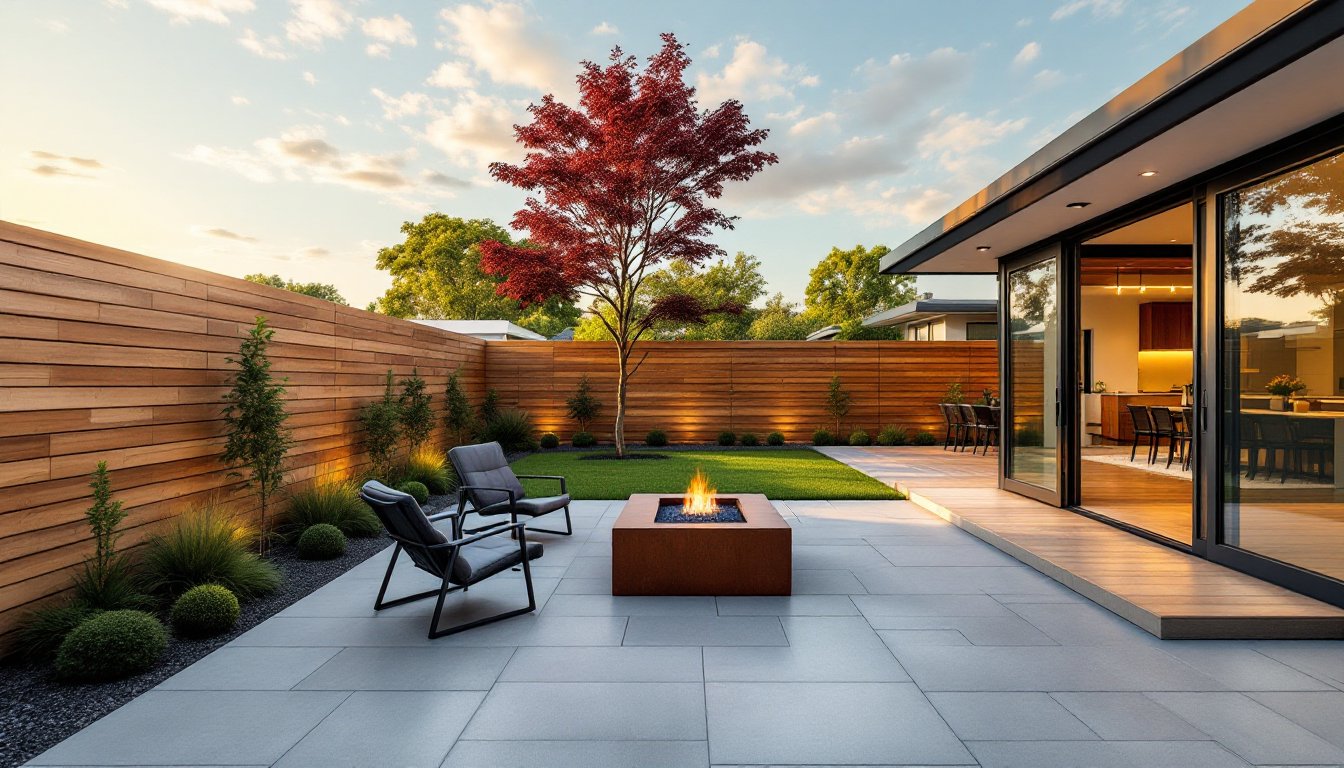
Fire features anchor gathering spaces. Modern fire pits often use corten steel (weathering steel that forms a stable rust patina) or poured concrete with gas burners. If building a wood-burning pit, check local regulations, many municipalities restrict open flames or require spark arrestors. Gas fire pits offer instant ignition and no ash cleanup, but require a natural gas line or propane supply. Bury lines at least 18 inches deep (local codes may require more) and hire a licensed plumber or gas fitter for connections.
Integrating thoughtful outdoor entertaining areas requires advance planning for utilities like electrical, gas, and water access.
Modern Materials and Hardscaping Choices
Material selection defines the modern aesthetic more than any other factor. Choose durable, low-maintenance options with clean, consistent appearance.
Concrete is the workhorse of modern hardscaping. Poured slabs can be finished smooth and sealed, broomed for texture, or ground and polished. Expect to pay $6–$12 per square foot for a basic broom finish, more for decorative treatments like integral color or exposed aggregate. Concrete requires control joints every 10 feet to manage cracking: plan joint placement to align with design lines for a deliberate look rather than random zigzags.
Pavers and slabs offer modular flexibility. Large-format concrete pavers (24×24 inches or 12×24 inches) installed with tight joints (⅛ inch or less) read as modern slabs but allow for easier repairs and better drainage than monolithic concrete. Set them in a 1-inch sand bed over 4–6 inches of compacted gravel base. Use a plate compactor (rentable for about $60/day) to achieve proper compaction, skipping this step leads to settling and uneven surfaces.
For a luxe look, porcelain pavers in concrete, wood, or stone finishes provide the aesthetics of natural materials with near-zero maintenance. They don’t absorb water, so they resist staining and won’t flake in freeze-thaw cycles. They’re also lighter than natural stone, reducing structural load on roof decks or elevated patios.
Gravel works for secondary paths or as a contrasting texture to solid hardscape. Use ¾-inch crushed angular stone (like crushed granite or limestone screenings) rather than rounded pea gravel, which shifts underfoot. Edge gravel areas with steel or aluminum edging to prevent migration into planting beds.
Many homeowners explore budget-friendly hardscape options that still deliver a modern aesthetic without premium pricing.
Lighting Design for Modern Backyards
Outdoor lighting extends usability after sunset and highlights architectural features. Modern lighting design favors subtlety, fixtures should illuminate paths and spaces without becoming the focal point.
Low-voltage LED systems (12V) are the current standard. They’re safer than 120V line voltage, more energy-efficient than halogen, and easier for DIYers to install. A typical starter kit includes a transformer (150W to 300W), cable, and six to eight fixtures. Run 12-gauge or 14-gauge landscape wire from the transformer to fixtures, burying it 6 inches deep (deeper if crossing a path). Use waterproof wire connectors, not wire nuts.
For pathway lighting, choose fixtures that cast light downward or horizontally, not up into eyes. Bollard lights (18–24 inches tall) or low mushroom lights work well. Space them 8–10 feet apart for even illumination without over-lighting.
Uplighting adds drama to trees, walls, or architectural elements. Position fixtures at the base of the target, angled up at 30–45 degrees. For trees, aim for the trunk and lower canopy: avoid lighting foliage from underneath (it looks spooky). Use fixtures with adjustable heads so you can fine-tune the angle after installation.
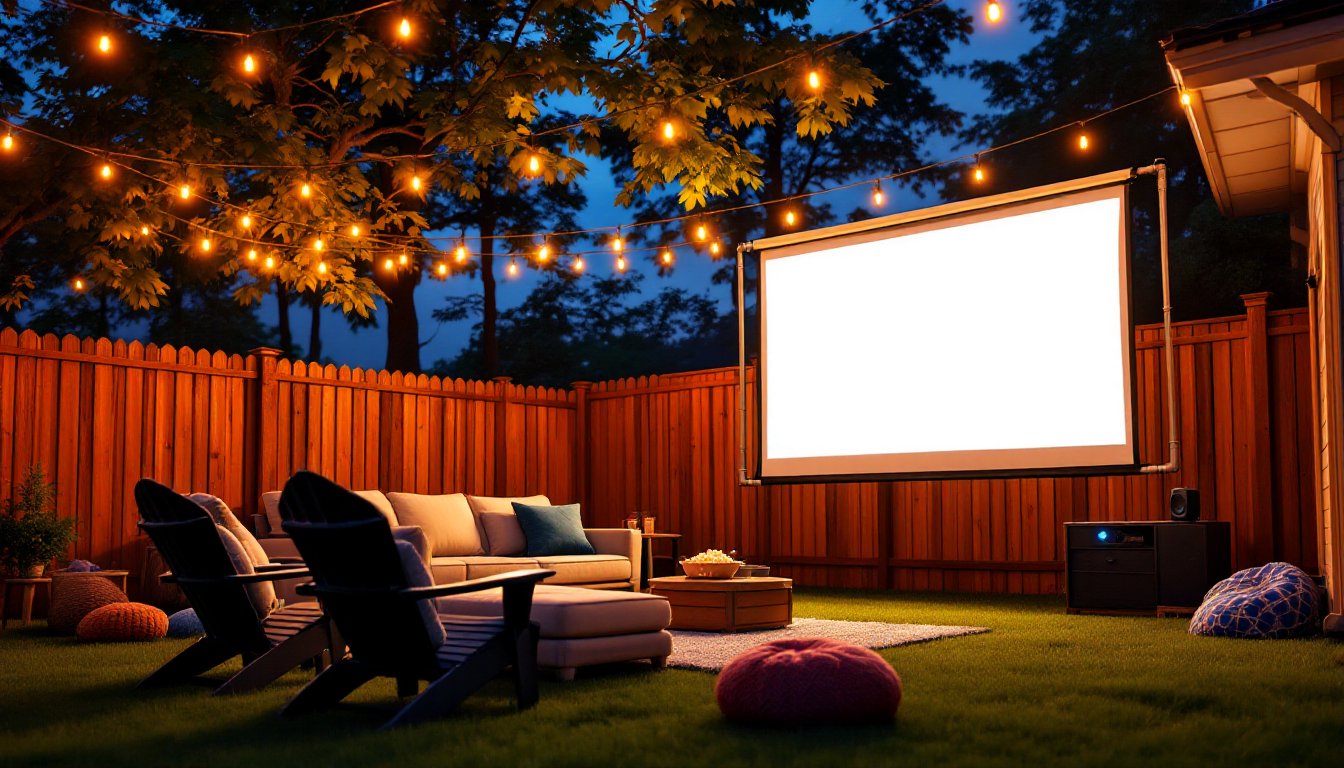
String lights have become a modern staple when done right. Use Edison-style LED bulbs on black or dark brown cord strung in straight, parallel lines rather than swooping arcs. Anchor them to posts or structural beams with eye hooks or cable tensioners. For a cleaner look, contemporary designs featured on sites like Homedit often run conduit or use integrated cable systems.
Install all outdoor fixtures on GFCI-protected circuits. If running 120V line voltage to the transformer or receptacles, that work requires a permit and should be done by a licensed electrician unless the homeowner is comfortable working in the main panel and pulling permits themselves.
Privacy Solutions with Modern Appeal
Privacy doesn’t require a stockade fence. Modern approaches use layered screening, strategic plantings, and architectural panels to create enclosure without feeling boxed in.
Horizontal slat fencing is the signature modern privacy solution. Slats are typically 1×4, 1×6, or 1×8 boards (actual dimensions: ¾×3½ inches, ¾×5½ inches, ¾×7¼ inches) spaced ½ to 1 inch apart. This spacing blocks sightlines while allowing air circulation, which reduces wind load and prevents the fence from acting as a sail. Use cedar, redwood, or Ipe for natural options, or composite fencing boards for zero-maintenance longevity.
Frame horizontal fences with 4×4 posts (actual 3½×3½ inches) set in concrete, spaced no more than 8 feet on center. Attach slats to 2×4 horizontal rails (top, bottom, and often mid-span) using exterior screws. For a floating look, mount the fence panels between posts rather than face-mounting to the front.
Living screens offer softer privacy. Bamboo (clumping varieties only, running bamboo is a nightmare), Thuja ‘Green Giant’ arborvitae, or Cryptomeria japonica grow quickly and tolerate shearing. Plant evergreens 3–4 feet on center for a solid screen within three years. Be realistic about mature size: a row of trees that will hit 15–20 feet tall needs to be set back from property lines and structures accordingly.
Laser-cut metal panels or slatted wood screens can be mounted on posts as standalone room dividers within the yard, creating intimate zones without full perimeter fencing. Corten steel panels develop a rust patina that complements natural wood and stone. Designs inspired by modern Brooklyn projects often use modular screens to section off dining or lounge areas.
For smaller yards, consider compact entertaining layouts that maximize privacy and function in tight footprints.
Conclusion
Modern backyards deliver high-impact outdoor living through thoughtful material choices, clean geometry, and spaces designed for real use. Start with a clear functional plan, invest in durable hardscaping, and resist the urge to clutter the design with too many features or plant varieties. With solid prep work and the right materials, homeowners can build outdoor spaces that look sharp and hold up for decades.