Table of Contents
ToggleSummer afternoons can turn a beautiful patio into an unusable hotbox. Without proper shade, outdoor furniture fades, guests retreat indoors, and the space homeowners invested in sits empty. Whether the goal is blocking harsh UV rays, creating a comfortable dining area, or extending outdoor living season, the right shade solution makes all the difference. From permanent structures that add property value to budget-friendly temporary fixes, these fifteen options cover every skill level, budget, and aesthetic preference.
Key Takeaways
- Backyard patio shade ideas range from permanent structures like pergolas and gazebos ($3,000–$8,000) to budget-friendly options such as shade sails ($80–$200), offering solutions for every budget and skill level.
- Permanent patio shade solutions such as attached covers and louvered roofs increase property value but require permits, professional installation, and structural considerations like proper ledger board flashing.
- Retractable awnings and motorized shade screens provide on-demand sun protection for $1,500–$4,000, combining flexibility with adjustable coverage that can block up to 90% of UV rays.
- Natural shade through strategically planted deciduous trees and vine-covered arbors offers economical long-term benefits and passive climate control, though trees may take 5–8 years to provide meaningful coverage.
- Combining fixed and adjustable shade elements—such as pairing a pergola with retractable panels, shade sails, and climbing plants—creates versatile micro-climates suitable for different activities throughout the day.
- Cantilever umbrellas and outdoor curtains deliver movable or flexible shade at moderate costs ($300–$800 and $100–$200 respectively), making them ideal for renters or those testing layouts before permanent installations.
Permanent Shade Structures for Year-Round Comfort
Pergolas and Gazebos
Pergolas rank among the most popular patio shade additions for good reason. These open-roof structures feature vertical posts supporting cross-beams and rafters, creating partial shade through their slatted design. A standard 10×12-foot pergola costs between $3,000 and $6,000 for materials (cedar or pressure-treated pine), with installation adding another $1,500 to $3,000 depending on complexity and regional labor rates.
Construction requires setting posts in concrete footings below frost line, typically 36 to 48 inches deep in northern climates. Check local building codes before starting: many jurisdictions require permits for structures exceeding 120 square feet or attached to existing buildings. Pergolas with retractable canopy systems offer adjustable coverage that blocks up to 90% of sunlight when extended.
Gazebos provide fuller protection with solid roofs, usually featuring octagonal or square designs. Unlike pergolas, they’re typically freestanding and work better for creating distinct outdoor rooms. Expect to pay $4,000 to $8,000 for a quality kit, or more for custom builds. Both structures benefit from climbing plants like wisteria or grapevines for additional natural shading.
Patio Covers and Awnings
Attached patio covers extend from existing rooflines, offering maximum shade with minimal yard footprint. Aluminum covers with insulated panels are popular for their durability and low maintenance, most carry 20-year warranties and cost $15 to $25 per square foot installed. Wood-framed covers (typically using 2×6 or 2×8 rafters spaced 16 inches on center) run slightly less but require periodic staining or sealing.
This is structural work. Attaching to house framing means locating studs or using ledger boards properly flashed to prevent water intrusion. Most municipalities classify attached covers as permanent structures requiring permits and inspections. The work often involves working at heights with power tools, hire a licensed contractor if not confident working on ladders or cutting precise roof tie-ins.
Retractable awnings offer shade on demand. Quality motorized units with aluminum frames and solution-dyed acrylic fabric cost $1,500 to $4,000 for 12×10-foot coverage. Look for fabrics rated for UPF 50+ sun protection. Manual crank versions save $500 to $800 but require more effort. Most mount to wall studs using lag bolts: installation is a manageable weekend DIY project requiring a drill, level, and second person to hold the unit during mounting.
Flexible and Budget-Friendly Shade Options
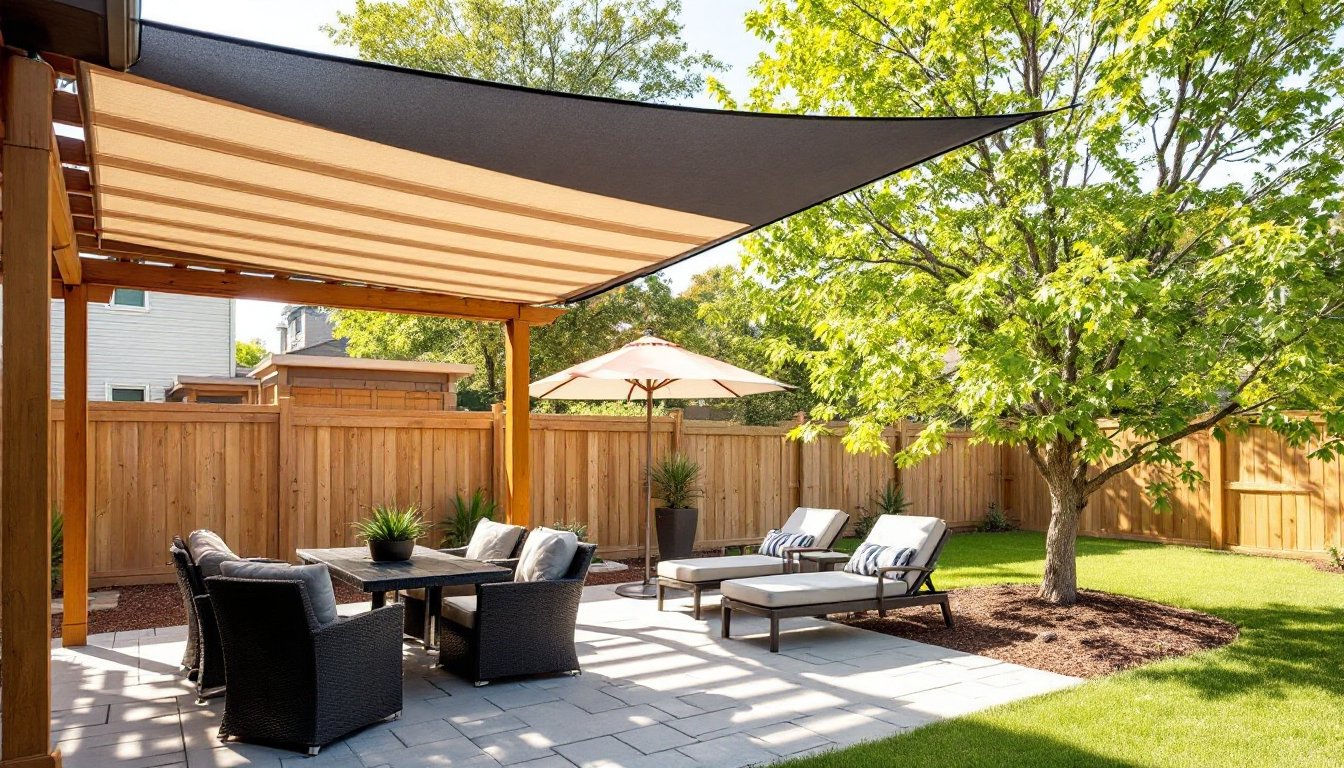
Shade sails deliver modern aesthetics at reasonable cost. These triangular or rectangular fabric panels attach to anchor points using stainless steel hardware, creating dramatic overhead coverage. A quality 12×12-foot square sail in UV-resistant HDPE fabric costs $80 to $200. Installation requires three or four anchor points, existing posts, fence corners, or purpose-built 4×4 posts set in concrete.
Key to proper installation: create a 10- to 20-degree slope for water runoff. Pull the fabric taut using turnbuckles: saggy sails collect water and look amateur. For permanent installations, use 5/16-inch stainless steel cable and eye bolts rated for outdoor use. Most homeowners can handle this project with basic tools, but getting tension right takes patience.
Cantilever umbrellas provide movable shade without center pole obstruction. Quality 10-foot models with aluminum frames and fade-resistant Sunbrella fabric run $300 to $800. The weighted base (typically requiring 100 to 150 pounds of sand or water) keeps them stable in light winds, but they should be closed or moved indoors when storms approach. Cheaper models under $200 often fail after one season, false economy.
Pop-up canopies work for temporary needs like parties or seasonal use. Commercial-grade 10×10-foot canopies with powder-coated steel frames cost $200 to $400. Skip the $60 big-box specials: their frames bend in moderate wind. For budget-conscious hardscaping projects, pairing a quality canopy with simple concrete pavers creates flexible outdoor zones without permanent construction.
Outdoor curtains add privacy and extra sun blocking to pergolas or covered patios. Look for water-resistant polyester with grommets spaced 6 inches apart for proper hanging. A set of four 54×96-inch panels costs $100 to $200. Mount them on galvanized curtain rods or wire rope: they can be drawn back when not needed.
Natural Shade Solutions Using Plants and Greenery
Fast-growing trees planted strategically deliver the most economical long-term shade. Red maple, river birch, or hybrid poplar can add 3 to 5 feet of height annually in proper conditions. Plant trees 10 to 15 feet from patio edges for adequate coverage without dropping excessive debris on furniture. Deciduous trees offer summer shade while allowing warming winter sun, a passive climate control benefit that reduces cooling costs.
Wait time matters. A 6-foot sapling takes 5 to 8 years to provide meaningful shade, making this solution best combined with temporary coverage during establishment years. Costs range from $75 to $300 per tree depending on species and size at purchase.
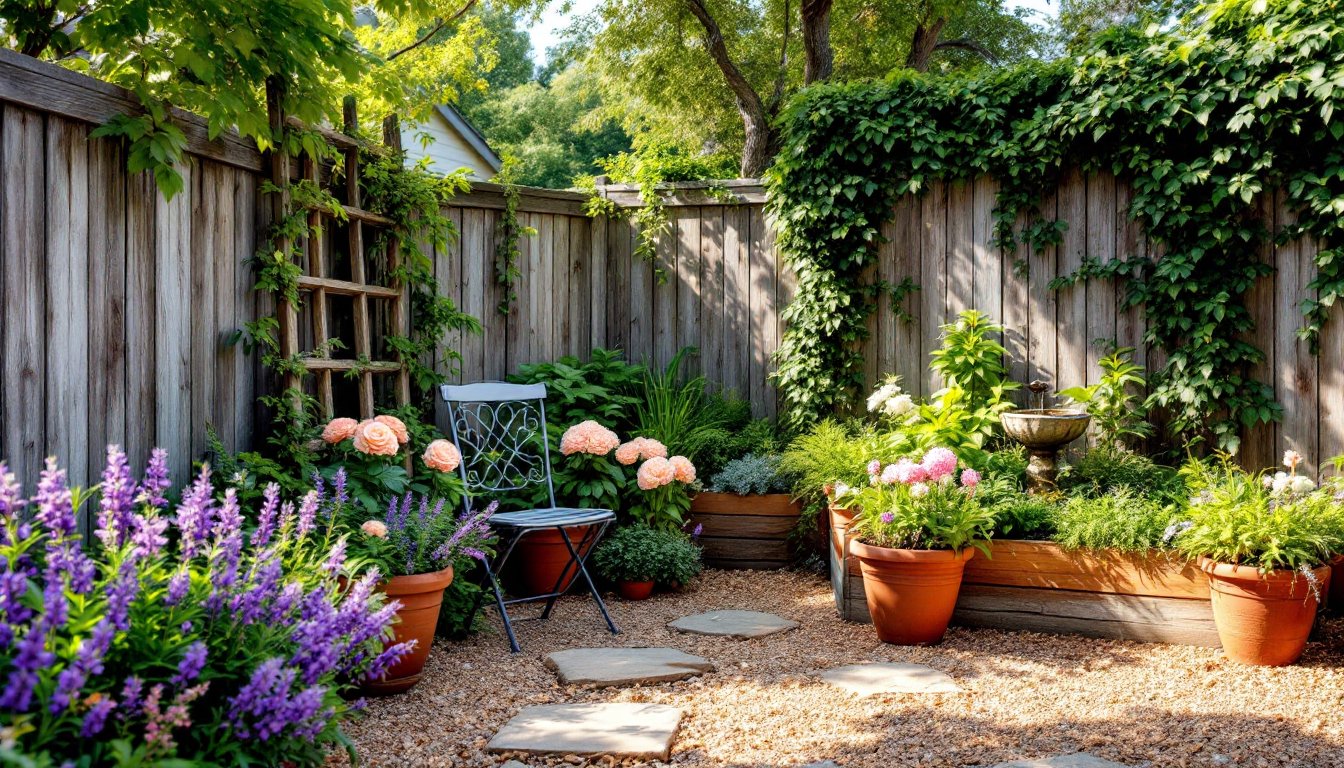
Vine-covered arbors create living shade faster than trees. Wisteria, trumpet vine, and clematis grow quickly on support structures, though aggressive growers like wisteria require annual pruning to prevent damage. A simple 4×4 post arbor with overhead 2×4 lattice costs $200 to $400 in materials and makes a weekend project for intermediate DIYers.
Climbing plants typically need two growing seasons to fill in completely. In the meantime, homeowners working on creative planter combinations can position large container specimens on wheeled plant caddies for moveable shade where needed most.
For immediate greenery impact, bamboo screening creates vertical shade barriers. Clumping varieties (not running types that spread aggressively) grow in containers or planting beds, reaching 8 to 12 feet in a single season. This works particularly well for blocking low-angle morning or afternoon sun that penetrates under roof overhangs. Combine with entertaining area layouts to define separate zones while providing sun protection.
Modern Retractable and Adjustable Shade Systems
Louvered roof systems represent the premium end of adjustable shade. Motorized aluminum louvers rotate from fully open to fully closed, offering rain protection as a bonus. These systems cost $25 to $45 per square foot installed, expect $7,500 to $15,000 for typical patio coverage. The investment pays off in versatility and weather resistance. Quality units carry 10- to 15-year warranties and integrate with home automation systems.
Installation requires structural attachment to house framing and electrical work for motorized operation. This is licensed contractor territory: the combination of structural loads, weatherproofing, and electrical code compliance makes it unsuitable for DIY unless working with substantial construction experience.
Retractable pergola canopies retrofit existing pergolas with slide-wire or track systems. Heavy-duty marine-grade fabric panels extend and retract manually or with motorized controls. Kits for standard 10×12 pergolas cost $400 to $1,200 depending on fabric quality and hardware. Installation involves mounting tracks to pergola rafters, a straightforward project requiring a drill, measuring tape, and ladder.
When planning shade as part of broader outdoor entertaining designs, adjustable systems offer the most flexibility for changing weather and different event types.
Shade screens with zip tracks mount to existing patio covers or pergolas, rolling down like window shades. These solar screens block 80% to 95% of UV rays while maintaining visibility and airflow. A motorized 10×8-foot screen costs $800 to $1,500 installed. Homeowners with basic tool skills can handle manual versions for $300 to $600. The zip-track edges prevent fabric from billowing in wind, a major improvement over older roller screen designs.
For those managing larger outdoor spaces, combining fixed and adjustable shade creates micro-climates for different activities. A louvered section over the dining area pairs with shade sails over the lounge zone for flexible sun control throughout the day.
Conclusion
The best patio shade solution balances budget, aesthetic goals, and how the space gets used. Permanent structures add property value but require larger investments and often permits. Flexible options suit renters or those wanting to test layouts before committing. Natural solutions take patience but deliver long-term benefits. Mix approaches based on specific needs, there’s no rule against combining a permanent pergola with retractable panels and strategic plantings for complete coverage.