Table of Contents
ToggleStamped concrete patios have come a long way from the days of questionable patterns and dated finishes. Today’s techniques deliver realistic textures, stone, wood, slate, at a fraction of the cost of natural materials. For homeowners eyeing a patio upgrade, stamped concrete offers durability, design flexibility, and lower maintenance than pavers or flagstone. Whether you’re planning a cozy entertaining spot or a sprawling outdoor living area, choosing the right pattern, color, and finish makes all the difference. This guide walks through proven design ideas, material considerations, and planning essentials to help you build a patio that lasts.
Key Takeaways
- Stamped concrete patios cost $8–$18 per square foot installed, making them 30–50% less expensive than natural flagstone or pavers while lasting 25+ years with proper sealing and maintenance.
- Popular backyard stamped concrete patio ideas include ashlar slate for refined elegance, wood plank designs for a deck aesthetic without rot, and stone patterns that disguise surface imperfections.
- Proper color application—using integral color combined with color hardener and release agents—creates realistic depth and variation that prevents the artificial look common in older stamped concrete work.
- Site preparation and drainage are critical to success; ensure 4–6 inches of compacted gravel base, slope at ¼ inch per foot, and plan control joints every 8–10 feet to prevent settling and cracking.
- Hiring a certified contractor is essential since stamping requires precision timing (90 minutes post-pour) and professional skill; DIY installation is not recommended for residential projects.
- Choose finishes strategically: matte or satin sealers offer the best slip resistance for high-traffic zones, while UV-inhibitor sealers prevent color fading in sun-exposed backyards.
What Is Stamped Concrete and Why Choose It for Your Patio?
Stamped concrete is poured concrete that’s textured and colored to mimic natural stone, brick, tile, or wood before it fully cures. Contractors press rubber or polyurethane stamps into the wet surface, then apply color hardeners and release agents to create depth and variation.
Why it works for patios:
- Cost efficiency: Typically $8–$18 per square foot installed, depending on complexity and region. That’s 30–50% less than natural flagstone or pavers.
- Durability: Properly installed stamped concrete lasts 25+ years with minimal maintenance. It resists weeds, won’t shift like pavers, and handles freeze-thaw cycles when sealed.
- Design range: Dozens of patterns and color blends available. You’re not locked into one look.
- Single-pour installation: Faster than laying individual pavers. Most residential patios (200–400 sq ft) pour and stamp in one day.
Key considerations: Stamped concrete requires a stable, well-compacted base (typically 4–6 inches of compacted gravel). It must slope 1/4 inch per foot for drainage. Cracking can occur if the subgrade settles or if control joints aren’t cut properly. Hire a contractor experienced in stamping, this isn’t a beginner DIY pour. In colder climates, budget for resealing every 2–3 years to prevent surface spalling.
Popular Stamped Concrete Pattern Ideas for Patios
Ashlar Slate and Natural Stone Patterns
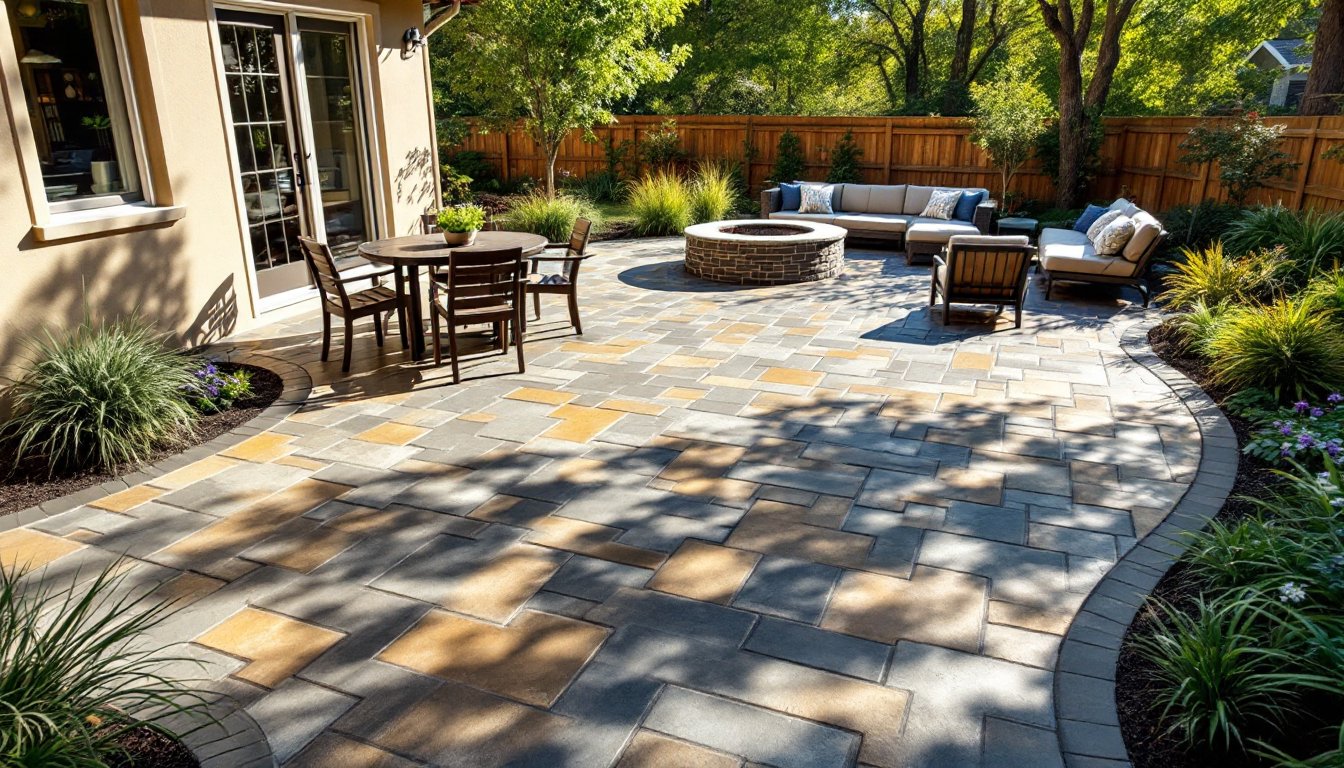
Ashlar slate remains the most requested stamp pattern for good reason. It mimics cut stone blocks with irregular edges and varied sizes, delivering a high-end look without the masonry labor. The pattern reads as natural without being busy, and it pairs well with both modern and traditional home styles.
Design tips:
- Choose random ashlar for a more organic feel, or seamless ashlar for cleaner, tighter joints.
- Pair with two or three complementary colors (e.g., gray base with charcoal and tan accents) to enhance depth.
- Works especially well on outdoor entertaining areas where you want texture underfoot but a refined appearance.
Fieldstone and European cobblestone patterns offer similar appeal but with rounder, more weathered edges. Fieldstone suits cottage or rustic settings, while cobblestone adds old-world charm. Both patterns disguise minor surface imperfections better than geometric stamps.
Wood Plank and Boardwalk Designs
Wood plank stamping has surged in popularity for homeowners wanting a deck aesthetic without the rot, splinters, or annual staining. Modern stamps replicate wood grain, knots, and saw marks convincingly.
Best practices:
- Use 6-inch or 8-inch plank widths to mimic real decking lumber. Wider planks (12+ inches) can look oversized and less authentic.
- Run planks parallel to the house for a traditional deck look, or diagonally for visual interest on larger backyards.
- Stick with warm tones, walnut, cedar, or weathered gray, to match natural wood. Avoid overly reddish stains, which age poorly.
Boardwalk patterns (narrower, tighter planks with visible nail or peg details) work well around pools or in coastal settings. They handle high-traffic areas better than real wood and won’t warp or splinter near water.
Caution: Wood-look stamping shows wear faster than stone patterns in high-traffic zones. Plan for a non-slip sealer and reapply every 2–3 years to maintain texture and color.
Color and Finish Options to Enhance Your Design
Color makes or breaks a stamped patio. Too bright, and it screams artificial. Too flat, and you lose the texture detail.
Integral color mixes pigment throughout the concrete during batching. It provides a consistent base tone and hides minor surface chips. Most contractors layer color hardener (a dry-shake powder applied to the surface) over integral color to create richer, variegated tones. Hardener also toughens the surface against abrasion.
Release agents (powders or liquids applied before stamping) prevent the stamps from sticking and add subtle secondary color. They settle into stamp recesses, creating shadows and depth. Choose a release color one or two shades darker than your base for natural contrast.
Popular color schemes:
- Warm earth tones (sandstone, terra cotta, tan): Pair well with brick homes and Southwestern landscapes.
- Cool grays and charcoals: Complement modern or contemporary exteriors. Often combined with white or light tan accents.
- Weathered wood tones (driftwood gray, aged cedar): Best for plank patterns.
Finish types:
- High-gloss sealer: Deepens color and creates a wet look, but shows scuffs and can be slippery when wet. Better for decorative areas than high-traffic patios.
- Satin or semi-gloss: Balances color enhancement with traction. Most versatile choice.
- Matte finish: Subtle sheen, excellent slip resistance. Preferred for pool decks and ramps.
Experts from HomeAdvisor note that selecting a sealer with UV inhibitors prevents color fading, especially in sun-drenched regions. Always test color samples on-site in different lighting before committing to a full pour.
Design Ideas by Patio Style and Function
Intimate dining patios (100–200 sq ft):
Go with ashlar slate or European fan patterns in neutral grays or tans. Keep borders simple, a 12-inch soldier course in a contrasting color defines the space without overwhelming it. Integrate planters along the perimeter to soften hard edges.
Multi-zone entertaining spaces (300–500 sq ft):
Combine patterns to delineate areas. Use wood plank stamping for a “deck” zone near the house, transitioning to random stone for a fire pit area or lounge seating. Apply a 6-inch border band between patterns to create visual separation. These setups are ideal when designing a backyard entertaining space that needs to serve multiple functions.
Pool decks and wet areas:
Slate or travertine patterns work best, they hide water spots and provide texture for bare feet. Specify a non-slip additive in the sealer (aluminum oxide or polymer grit) for wet-surface traction. Avoid wood plank patterns here: they can become slick.
Budget-conscious projects:
Single-pattern, single-color installs cost less. Random stone or seamless ashlar in a standard gray or tan keeps material and labor costs down. Skip decorative borders and opt for saw-cut control joints instead of stamped joints. According to ImproveNet, simplifying the design can reduce installation costs by 20–30%, making it one of the most inexpensive hardscape options for larger areas.
Modern minimalist patios:
Large-format tile stamps (12×12 or 12×24 inch) in solid charcoal or light gray deliver a sleek, contemporary look. Pair with thin grout lines (1/4 inch) and a matte sealer. Add LED strip lighting in control joints for evening ambiance.
Planning Your Stamped Concrete Patio Project
Site prep matters more than the stamp. Most stamped patio failures trace back to poor subgrade or drainage.
Steps to plan:
- Check codes and permits: Many jurisdictions require permits for patios over 200 sq ft or those adjacent to the home’s foundation. Verify setback requirements and drainage rules with your local building department.
- Test soil and drainage: Clay soils expand and contract, causing cracks. Consider a thicker gravel base (6+ inches) or a geotextile fabric to stabilize the subgrade. Ensure the patio slopes away from the house at 1/4 inch per foot minimum.
- Plan control joints: Cuts should occur every 8–10 feet in both directions to control cracking. Joints can be tooled (decorative grooves) or saw-cut within 24 hours of the pour.
- Budget accurately: Factor in base prep, concrete (typically 4-inch slab, 3,500–4,000 psi mix), color, stamping labor, and sealing. Regional costs vary, get three quotes. Most contractors require 30–50% deposit upfront.
- Timing: Concrete cures best in moderate temps (50–80°F). Avoid pours in extreme heat (over 90°F) or when nighttime temps drop below 40°F. Plan for at least 7 days of cure time before foot traffic and 28 days before placing heavy furniture.
DIY or hire a pro? Stamping requires speed and precision, you’ve got about 90 minutes after the pour to stamp before the concrete sets too firm. Unless you’ve poured slabs before and have a crew to help, hire a contractor. Look for installers certified by the Decorative Concrete Institute or with verifiable portfolios. Get references and inspect completed projects in person.
Safety note: Wear cut-resistant gloves, knee pads, and safety glasses during any site prep or finishing work. Wet concrete is caustic, rinse skin immediately if exposed.
For more inspiration on transforming outdoor spaces affordably, explore DIY backyard projects that complement a new stamped patio. Resources like Gardenista offer additional design ideas for integrating hardscaping with landscaping.