Table of Contents
ToggleMost yards have at least one awkward corner, maybe where the fence meets the shed, or that odd wedge behind the patio nobody quite knows what to do with. These forgotten zones tend to collect weeds, old pots, or nothing at all. But corners are actually prime real estate for garden projects. They offer natural boundaries, built-in backdrops, and a sense of enclosure that flat beds can’t match. With the right approach, a bare corner becomes a focal point, a functional garden bed, or a cozy retreat. Here are twelve practical ideas for turning those dead zones into something worth showing off.
Key Takeaways
- Backyard corner garden ideas maximize unused yard space by leveraging natural boundaries like fences and walls as built-in frames and backdrops for plants.
- Corners create unique microclimates—south-facing areas suit heat-loving plants, north-facing zones work for shade-tolerant species like ferns, and east/west exposures offer moderate sun for versatile perennials.
- Vertical gardens transform tight corner spaces with trellises or pocket planters mounted to walls or fences, enabling climbing plants and edibles while requiring only 12-inch vertical spacing and consistent moisture checks.
- Raised bed herb and vegetable gardens fit naturally into corners near kitchen doors, with L-shaped or triangular designs accommodating dozens of compact varieties like basil, cherry tomatoes, and lettuce in just 32 cubic feet of soil.
- Rock and succulent gardens provide low-maintenance corner solutions for dry climates, requiring only coarse sand bases and minimal watering once established—perfect for neglected zones.
- Corner water features and fountains add sensory appeal with self-contained options needing no plumbing, paired with moisture-loving plants like hostas and Japanese iris to create focal points in small spaces.
Why Backyard Corners Are Perfect for Garden Projects
Corners solve design problems by default. The two intersecting planes, whether fences, walls, or property lines, create a natural frame that anchors plants and hardscape. This saves on materials: less edging, fewer stakes, and no need to define borders from scratch.
From a practical standpoint, corners often receive overlooked microclimates. A south-facing corner might trap heat and sunlight, ideal for heat-loving annuals or Mediterranean herbs. North-facing corners stay cool and shaded, perfect for ferns or hostas. East or west exposures split the difference, offering morning or afternoon sun that suits a wide range of perennials.
Corners also tend to be out of the main traffic flow, which means less trampling and more room for delicate plantings or hardscape features that need to cure or settle. If one side of the corner is a solid structure, like a garage wall or fence, it doubles as a trellis anchor point or backdrop for taller plants, cutting down on staking.
Finally, corner gardens are self-contained. They’re easier to water, mulch, and weed than sprawling beds. Homeowners can tackle a corner project in a weekend without committing to a full yard overhaul, making them ideal for budget-conscious DIY projects.
Vertical Garden Designs for Tight Corner Spaces
When floor space is limited, build up. Vertical gardens maximize planting area without encroaching on walkways or lawn.
Materials and Structure:
Use a wooden trellis, wire grid panel, or modular pocket planter mounted to the fence or wall. Cedar or pressure-treated pine resist rot: for metal, choose galvanized or powder-coated steel to prevent rust. Anchor vertical structures into wall studs or fence posts with 3-inch exterior-grade screws and consider L-brackets for added stability if the planter will hold soil weight.
For a DIY build, 1×4 or 1×6 boards work well for a simple ladder-style trellis. Space horizontal rungs 12 to 18 inches apart to support climbing plants. If building a freestanding unit, secure the base in concrete footings or use 4×4 posts set at least 2 feet deep for wind resistance.
Plant Selection:
Climbing varieties thrive in vertical setups. Try clematis, climbing roses, honeysuckle, or jasmine for flowers and fragrance. Edibles like pole beans, sugar snap peas, and cucumber work well if the corner gets six-plus hours of sun. For shade, English ivy or Boston fern in hanging pockets add lush texture.
Irrigation Tip:
Vertical gardens dry out faster than ground beds. Install a simple drip line along the top edge or use self-watering pocket planters. Check soil moisture twice weekly in summer.
Safety Note:
Wear gloves and safety glasses when cutting lumber or drilling into masonry. Use a stud finder before driving screws into walls to avoid hitting electrical wiring.
Cozy Corner Seating Gardens with Flowering Plants
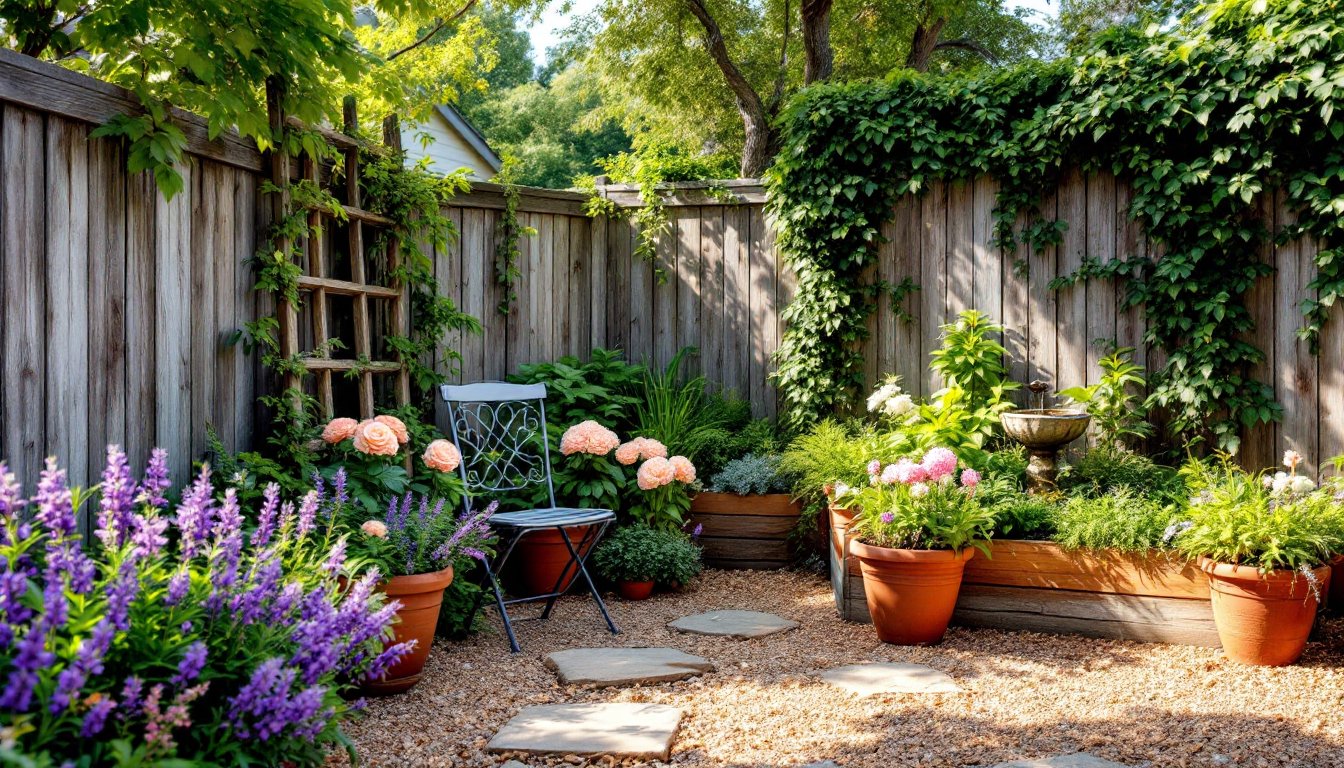
A corner seating garden turns unused space into a destination. The key is layering plants around a focal seating element, bench, bistro set, or a pair of Adirondack chairs.
Hardscape Foundation:
Start with a 4×4-foot or 5×5-foot paver pad or gravel base to define the seating zone and prevent mud. Use ¾-inch crushed gravel over landscape fabric for drainage, then top with flagstone, brick pavers, or decomposed granite. Compact the base with a hand tamper to prevent settling.
If the corner is shaded, skip pavers and lay rubber mulch or wood chips over fabric, they’re softer underfoot and won’t trap heat.
Planting Layout:
Arrange plants in a U-shape around the seating, with taller specimens in back and shorter ones in front. For a classic cottage look, combine lavender, salvia, and coneflower in full sun. In partial shade, use hydrangea, astilbe, and heuchera.
Add a small arbor or pergola corner bracket overhead to support flowering vines like wisteria or climbing hydrangea, this creates a canopy effect and boosts the cozy factor, much like a well-designed outdoor entertaining space.
Container Accents:
Flank the seating with a pair of large planters, 16 to 20 inches in diameter, filled with seasonal color. Swap annuals as needed: pansies and snapdragons in spring, petunias and zinnias in summer, mums in fall.
Lighting:
String low-voltage LED path lights or a single solar spotlight to highlight a specimen plant. This extends usability into evening hours without running new electrical lines.
Corner Herb and Vegetable Garden Layouts
Edible gardens fit naturally into corners, especially near the kitchen door. The confined space simplifies crop rotation and pest management.
Bed Construction:
Build a raised bed using 2×8 or 2×10 cedar or composite boards. For a corner, create an L-shaped or triangular bed. A 4×4-foot L-shaped bed holds roughly 32 cubic feet of soil, enough for a dozen herb plants or six compact vegetable varieties.
Line the bottom with ¼-inch hardware cloth to deter burrowing pests. Fill with a mix of 60% topsoil, 30% compost, and 10% perlite or coarse sand for drainage.
Crop Selection:
Herbs: Basil, parsley, cilantro, thyme, oregano, and chives all do well in 6 to 8 inches of soil. Plant basil and cilantro every two weeks for continuous harvest.
Vegetables: Choose compact or dwarf varieties. Cherry tomatoes (staked or caged), bush cucumbers, lettuce, radishes, and dwarf peppers fit tight quarters. Avoid sprawling crops like pumpkins or full-size squash unless vertical trellising is an option.
Vertical Add-Ons:
Mount a 6-foot bamboo teepee or cattle panel trellis in the back corner for pole beans or peas. This keeps vines off the ground and maximizes yield per square foot.
Watering:
Herbs need moderate water: vegetables need consistent moisture. A soaker hose on a timer simplifies irrigation. Run it in a spiral or zigzag pattern and cover with 2 inches of mulch to reduce evaporation.
Season Extension:
In colder zones, add row cover hoops made from ½-inch PVC pipe and frost blanket fabric to extend the growing season by four to six weeks in spring and fall. According to experts at The Spruce, proper seasonal planning and protective covers can significantly boost vegetable yields.
Rock and Succulent Corner Garden Ideas
Low-water rock gardens suit dry climates and neglected corners with poor soil. They’re also among the lowest-maintenance options.
Base Prep:
Remove existing sod or weeds and grade the corner for drainage, succulents rot in standing water. Spread a 2-inch layer of coarse sand or decomposed granite as a base. No need for topsoil: most succulents prefer lean, fast-draining substrates.
Rock Placement:
Use a mix of sizes for visual interest. Place one or two accent boulders (50+ pounds) first, these anchor the design. Fill in with river rock, lava rock, or crushed granite in the 1 to 3-inch range. Avoid smooth pea gravel: it shifts underfoot and doesn’t hold mulch well.
Group rocks in odd numbers (three or five) and bury the bottom third for a natural, settled look.
Succulent Varieties:
Sedum, hens-and-chicks (Sempervivum), agave, aloe, and echeveria thrive in full sun and require water only every two to three weeks once established. In partial shade, try jade plant or snake plant (which tolerates outdoor conditions in zones 9–11).
Plant in pockets between rocks, leaving 6 to 12 inches between crowns for airflow. Succulents spread slowly, so resist the urge to overcrowd.
Optional Accents:
Add a piece of driftwood or a ceramic garden sphere for contrast. Small solar lights tucked between rocks provide subtle evening glow, similar to ideas used in small-space entertaining designs.
Maintenance:
Pull weeds by hand, herbicides can damage succulents. Refresh rock mulch every two to three years as it settles or gets buried.
Water Features and Fountain Corner Gardens
A corner fountain or small pond adds movement and sound, turning a static garden into a sensory experience.
Fountain Options:
Self-contained fountains (15 to 30 gallons) are the easiest install, no plumbing required. Place the reservoir at grade, fill with water, plug into a GFCI-protected outdoor outlet, and you’re done. Look for units with submersible pumps rated for continuous use.
For a custom build, use a rigid plastic pond liner (30 to 50 gallons) sunk into the ground. Stack flagstone or river rock around the rim and hide the pump with larger stones. Run the power cord through ¾-inch PVC conduit buried 6 inches deep to meet NEC outdoor wiring standards (check local codes).
Pump Sizing:
Match pump flow rate to fountain height. A 200 GPH (gallons per hour) pump handles a 2-foot vertical lift: a 400 GPH pump works for 4-foot spouts. Oversizing wastes energy and creates excessive splash.
Plant Pairings:
Surround the water feature with moisture-loving plants: cardinal flower, Japanese iris, marsh marigold, or hostas. Keep soil-based plants at least 12 inches from the water’s edge to avoid sediment runoff. Landscape designers at Gardenista recommend using water features to create focal points and add dimension to small gardens.
For a desert or xeriscape theme, pair a bubbling urn fountain with ornamental grasses (like blue fescue or fountain grass) and gravel mulch.
Winter Prep:
In freeze zones, drain the reservoir and store the pump indoors before the first hard freeze. Leaving water in the system risks cracking the liner or damaging the pump seals.
Safety Note:
Always use a GFCI outlet for outdoor water features. If installing new wiring, hire a licensed electrician, DIY electrical work in wet environments carries shock risk and may void homeowner’s insurance.
Conclusion
Backyard corners don’t have to sit empty. Whether it’s a vertical herb garden, a rock feature, or a corner fountain, these spaces offer built-in structure and microclimates that make them easier to plant, and more interesting to look at, than wide-open beds. Pick a design that matches sun exposure, water access, and how much ongoing care fits the schedule. Then grab a shovel and turn that forgotten wedge into the best part of the yard.